- calendar_today August 22, 2025
Often heralded as a transforming technology, artificial intelligence is clearly being heavily invested in by Microsoft. Though Windows Copilot steals the show, the company is quietly improving the core apps in Windows 11 with potent artificial intelligence capabilities, which is far more understated—and maybe more important. Microsoft is testing a variety of intelligent capabilities in familiar tools, including Photos, Camera, Snipping Tool, and Paint, according a Windows Central report. Not to bombard consumers with brand-new platforms is the aim. Rather, it’s to improve what already exists, gently simplifying and accelerating daily chores.
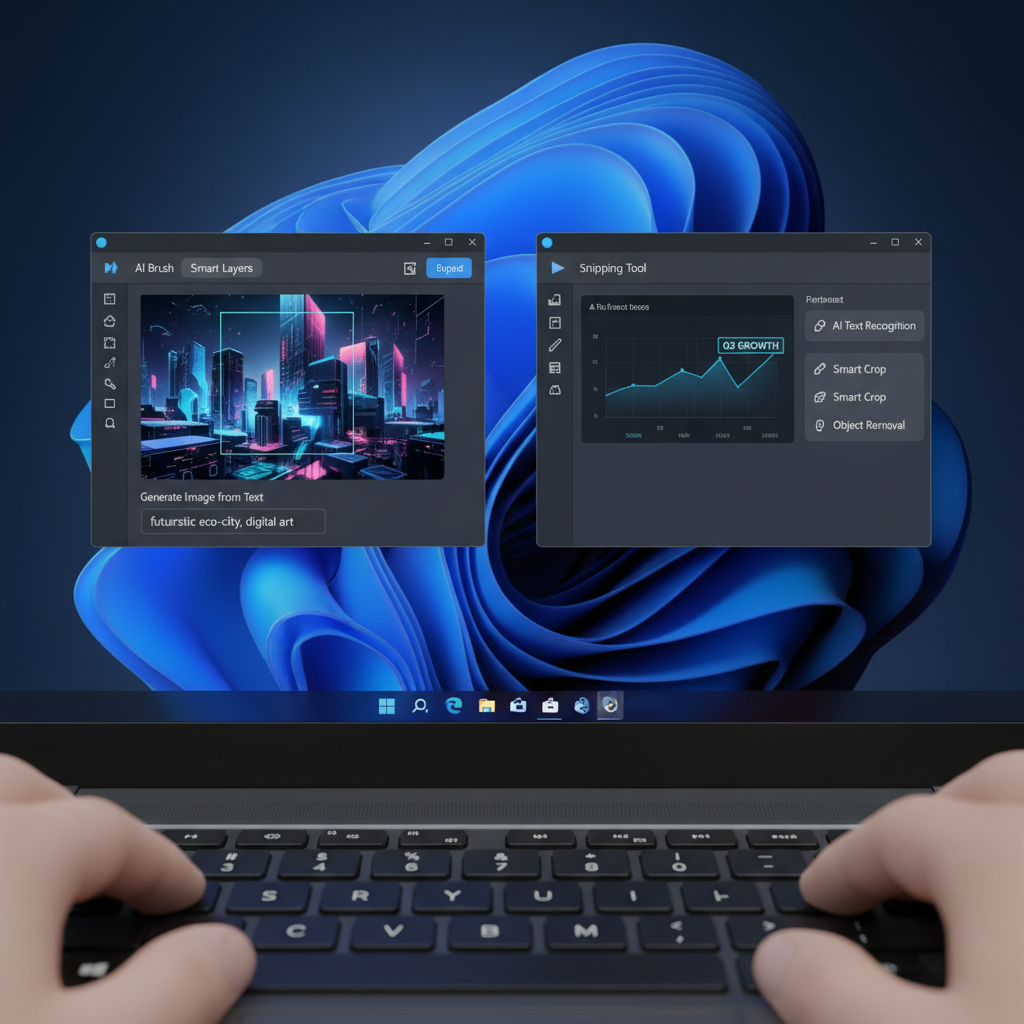
OCR, or optical character recognition, is one of the features under development now. Though it sounds simple, this is a really useful addition. OCR built into Snipping Tool and Photos will enable you to instantly extract text from screenshots and images. Imagine being able to copy the text exactly from the image—no more squinting, no more retyping—after quickly grabbing a screen grab of a quotation, a chart, or handwritten notes. Once necessary for third-party tools or cloud services, this kind of capability is now a seamless native choice right on your desktop.
Microsoft also intends for the Photos app to have smarter capabilities. This includes using artificial intelligence to identify objects, people, and animals in images so users may separate them or eliminate the background with a single click. Previously found in Photoshop or other pro-level editing tools, this kind of capability may soon be as simple as opening a picture and dragging your cursor. This change can transform the Photos app from a basic viewer into a light but capable editor fit for presentations, reports, or simply more effective organization of your own gallery.
Even the long-forgotten Paint program is getting a futuristic bent. Microsoft is testing a capability that would bring generative artificial intelligence. Typing something like “a medieval castle on top of a mountain during a lightning storm,” the app will create an image for you instead of your mouse drawing pixelated trees or stick figures. The same DALL-based technology underused in Bing Image Creator drives this. It’s a far cry from the Paint of old and a clear indication that Microsoft values allowing regular users access to sophisticated creativity tools.
These capabilities are not merely fads in software. They depend on major underhood hardware. They will especially be driven by Neural Processing Units, or NPUs. These chips are meant to manage artificial intelligence chores more effectively than either general-purpose CPUs or even GPUs. Previously, including NPUs into its ARM-based CPUs for Windows, Qualcomm’s 7040 series and Intel’s Meteor Lake chips are now bringing NPUs to mass x86 PCs as well.
An NPU indicates that your PC can manage local AI tasks. That is faster, safer, and more dependable than depending on the cloud. Important for privacy, local processing guarantees that your data stays on your machine and also lets features function even while you’re offline. Though most consumers won’t know what an NPU is, this technical improvement supports a better user experience.
The only NPU-accelerated features in Windows 11 right now are noise suppression and simple enhancements like video background blur. But the fresh wave of app enhancements reveals that Microsoft has a far bigger idea in mind. AI is no more something for chatbots or tech demos alone. It is quietly, powerfully, and without altering the core experience woven into the daily software we use.
One interesting thing is Microsoft’s restraint. These updates are wonderfully grounded in a time when artificial intelligence is sometimes used as a marketing buzzword. There is no new subscription model, no learning curve, no radical redesign. Just more intelligent tools from which you already find expectations. This innovative model feels more like a natural evolution than a revolution, and that might be exactly what consumers want right now.