
- calendar_today August 24, 2025
Federal policymakers in Washington D.C. debate the consequences of declining cotton production in 2025 on U.S. trade and economic stability.
Washington, D.C. — The continued decrease in cotton production throughout the U.S. is rapidly becoming a political firestorm in the nation’s capital. With cotton production plummeting in major states such as Texas, Georgia, and Mississippi, lawmakers in Washington are now dealing with the larger trade and economic issues, particularly as they pertain to the United States’ competitiveness on the world stage and continued obligations under programs such as the Generalized System of Preferences Plus (GSP+).
Although climate change, changing weather patterns, and increased input expenses are primarily responsible for the reduced yields, the fallout is resonating far beyond the fields. Cotton is intricately linked with U.S. trade, and its decline has the potential to imperil everything from exports to foreign trade agreements.
A Warning Sign for U.S. Agriculture and Trade
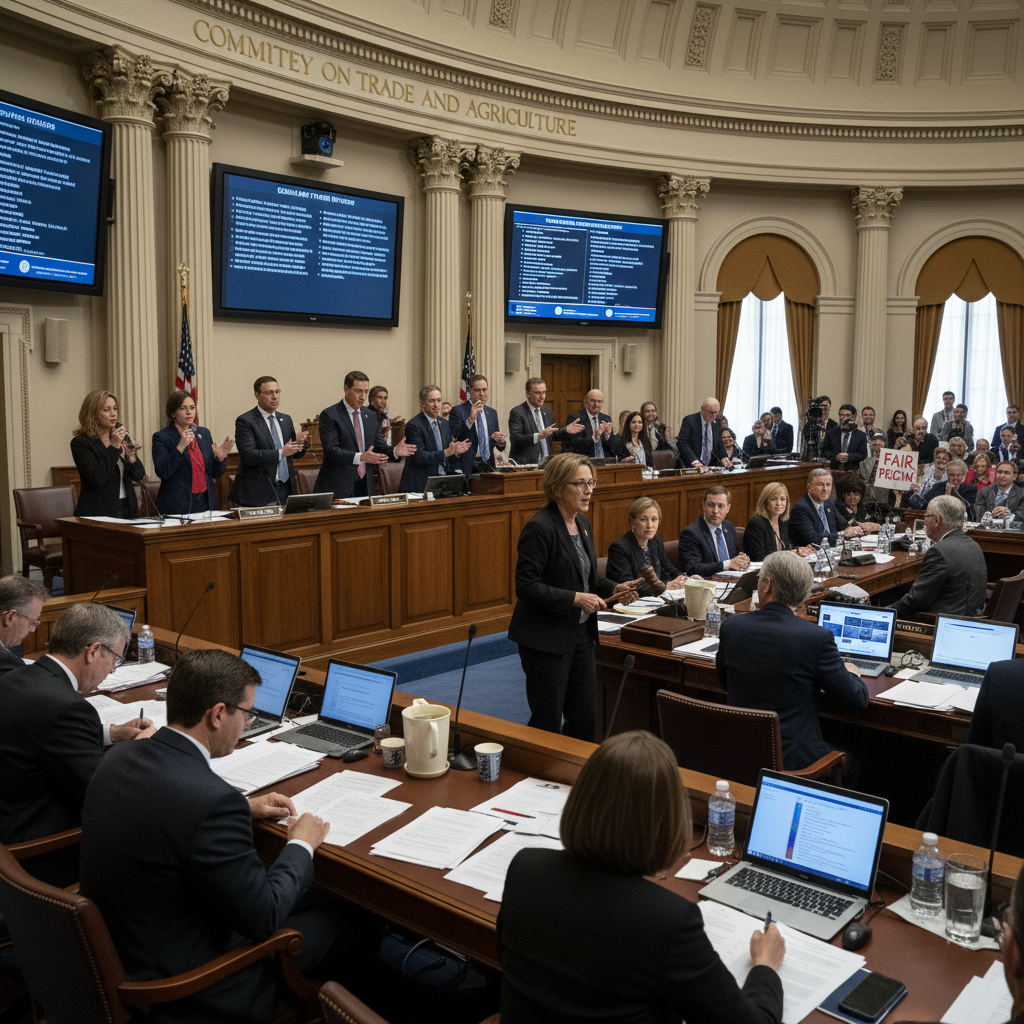
During a recent hearing before Congress, lawmakers from both sides of the aisle voiced alarm at where the cotton industry is headed in 2025. “We can’t ignore the place of cotton in our economy, particularly in rural America,” stated one of their Southwestern colleagues. “If we let this matter pass, we are inviting a chain reaction that will hurt farmers, manufacturers, and our trade position globally.”
American cotton is shipped globally and is essential to industries like apparel, textiles, as well as some technology-related packaging. But if production keeps falling, America might be unable to satisfy the domestic market, much less export contracts overseas.
Members of Congress are especially concerned that dwindling supply will produce higher prices, slower exports, and trade deficits, which in turn could impact the nation’s relationships with its largest trading partners.
GSP+ Under Scrutiny
One of the major areas of concern in Washington is how reduced cotton production affects the U.S. trade structure, particularly the Generalized System of Preferences Plus (GSP+). The GSP+ provides duty-free or low-duty entry into U.S. markets for some developing nations, enabling American businesses to obtain goods at lower prices while fostering economic development in partner countries.
But if American cotton becomes shorter and more costly, cotton-importing and cotton-exporting industries can become less competitive. This may prompt reconsideration of the GSP+ benefits and pressure legislators to renegotiate current agreements.
“We’re in a tricky situation,” one trade policy analyst said. “We need to keep our trade relationships healthy, but we also need to stand up for our domestic businesses. The cotton shortage is making it more difficult to find balance.”
The Manufacturing and Retail Industry Feels the Squeeze
Although the problem begins in the fields, its effects are being seen in boardrooms and factories across the country. Retailers, textile makers, and logistics managers are growing more worried about disturbances that will increase expenses and delay production.
In Washington, representatives of business are urging Congress to move swiftly. A few are requesting emergency aid for cotton farmers, while others are advocating greater access to alternative fiber imports to plug the gap.
“Each delay or rise in cotton costs impacts our bottom line,” commented a clothing manufacturer in a policy roundtable in D.C. “We want certainty in supply. That entails backing up farmers and updating trade rules to account for today’s challenges.”
Climate Policy and Agriculture Tensions
Climate change is also at the forefront of discussion. A number of lawmakers have cited the imperative to assist farmers adapting to warmer, drier conditions. Items proposed for consideration are increased federal spending on irrigation systems, drought-resistant seeds, and soil regeneration projects.
But there is some disagreement about just how far to extend environmental regulations. Some legislators contend that tighter restrictions will only place additional burdens on beleaguered farms, while others contend long-term sustainability must take precedence to ensure the future of cotton.
Congress’ challenge is to balance the protection of the environment, agriculture, and maintaining the power of American trade.
Calls for Strategic Action
To solve the problem, D.C. lawmakers are planning a step-by-step solution:
- Emergency relief for cotton growers most affected by climate fluctuations.
- Spending on crop research to increase yields and resilience to droughts.
- Reform of trade policies to defend U.S. interests if GSP+ regulations change.
- Diversification plans to assist industries in locating alternative sources of fiber.
- Public-private collaborations to finance development in the production and processing of cotton.
“Congress needs a national strategy,” declared one Midwestern congresswoman. “The crisis isn’t disappearing, and if we don’t act now, we risk losing our competitiveness in international trade.”
Looking Ahead
While Washington D.C. weighs what to do next, one thing is certain: the cotton problem is no longer solely a farmer’s issue—it’s a national economic issue.
The choices that are made in the capital in the coming months might recast the way that the U.S. assists its farmers, conducts its trade policy, and remains competitive in the global market. For now, however, the gaze of the cotton industry—and many others—remains on Capitol Hill, with the hope that wise, timely leadership will guide the nation through this emerging crisis.


