- calendar_today August 27, 2025
Washington D.C. To Face AI-Induced Changes in Job Market by 2030
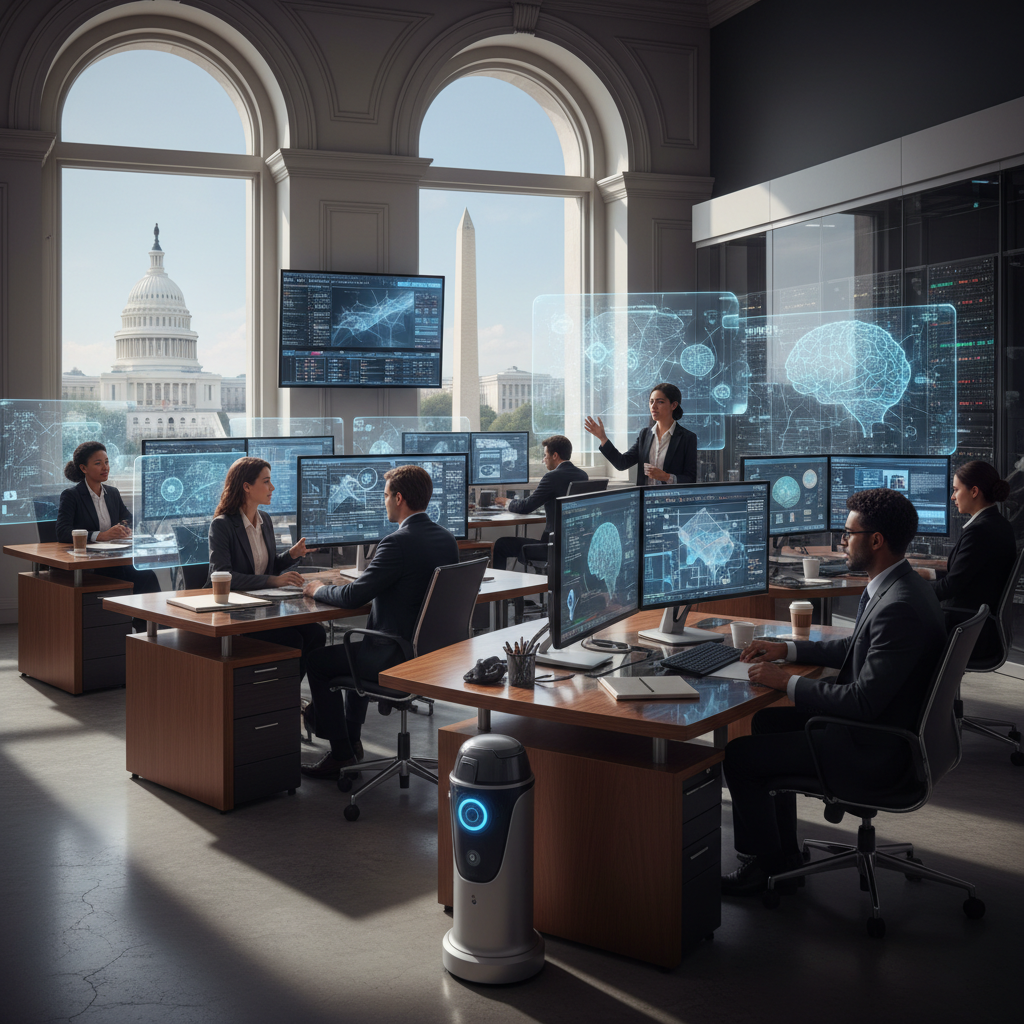
Artificial Intelligence (AI) is no longer on the horizon—it’s already arrived. From smart assistants to self-checkout kiosks, AI is changing the way we work and live. In Washington D.C., the impact will be immense. By 2030, AI is expected to replace or alter nearly 50% of the district’s jobs.
For a city that thrives on government services, law, education, and technology, the onset of AI brings with it challenges along with new opportunities. Let’s take a close look at how the D.C. job market will look in the next two years, which industries will be affected the most, and how workers can stay ahead.
Why AI Is Changing the Game
AI systems are constructed to gain experience, make decisions, and perform tasks that have traditionally been done by hands. They are being put to use in nearly every industry. In D.C., where a lot of work is information work, communication, and government, the impact of AI won’t necessarily be people losing their jobs but how they do their job.
Jobs will be eliminated in some cases. Others will have work automated so that employees can focus on more strategic or creative projects. Either way, the workforce must adapt.
Washington D.C. Industries Most Affected by AI
1. Government and Public Administration
Washington D.C. is the nation’s capital and where thousands of federal employees live. AI is starting to assist with:
- Document management
- Data analysis
- Fraud detection
- Automation of workflow
While high-level decision-making remains the domain of human intuition, back-office operations and repetitive tasks are being gradually outsourced to AI. Workers may need to switch from clerical to technical or analytical posts.
2. Legal and Regulatory Services
As the legal capital of the country, D.C. has many law firms, consultants, and compliance experts. AI solutions today can:
- Analyse contracts
- Search for jurisprudence in legal databases
- Facilitate research cases
Paralegals and junior legal assistants will see reduced demand, however, with new legal tech management roles and AI-backed law services in the pipeline.
3. Education and Training
There are many universities, think tanks, and training schools in D.C. Education is being revolutionized by AI:
- Personalized learning
- Virtual classrooms
- Automated grading
Teachers will not become extinct, but their roles will shift. They will require more individuals with a good understanding of how to leverage technology to promote education and instruct students on how to leverage AI tools effectively.
4. Healthcare and Public Health
With hospital, clinic, and health agency offices across the city, AI is helping to:
- Diagnose disease
- Monitor patient records
- Predict public health trends
Scheduling, medical coding, and administrative roles may decrease, but demand for AI literate nurses, technicians, and health data analysts will rise.
5. Media and Communications
There is strong representation in media, journalism, and policy communication in D.C. as well. AI is used to:
- Generate reports
- Post-edit video and audio
- Track online public opinion
Writers and editors may need to collaborate with AI to improve speed and delivery, focusing more on creativity, strategy, and human touch.
What Types of Jobs will Increase?
In the face of disruption, AI will also produce thousands of new jobs in Washington D.C. Some of the fields that will increase are:
- AI policy and ethics specialists
- Cybersecurity analysts
- Data scientists and machine learning engineers
- Healthcare support staff leveraging AI tools
- Education tech specialists
- Green energy and sustainability jobs
As it will also be the hub for AI governance, regulation, and strategy, it will also create specialized positions in the private and public sectors.
How Washington D.C. Employees Can Get Ready
1. Learn Digital Literacy
Just being exposed to AI tools minimally will have a great impact. Employees will need to learn about how AI operates, where it is applied, and how to work with it.
2. Reskill and Upskill
Colleges, online portals, and D.C. job training centers offer certification and short courses in technology, data analytics, cybersecurity, and more. These will be in high demand.
3. Develop Soft Skills
Creativity, leadership, critical thinking, and emotional intelligence are soft skills that will never be out of fashion. They are the weak points of AI and human strengths.
4. Stay Flexible
The job market will keep evolving. Staff members who remain open to change and dedicate themselves to continuous learning shall enjoy the highest chances of success.
What Policymakers and Employers Must Do
To make a seamless transition, something must be done at all levels:
- Employers should offer in-house training and promote career flexibility.
- Schools should train students for future jobs, not current ones.
- The government can assist in workforce development programs, especially for employees who risk displacement.
Washington D.C. has a unique role to play as a nationwide model to ensure AI adoption is equitable, ethical, and responsible throughout.
Final Thoughts: A New Era for D.C. Jobs
By 2030, Washington D.C.’s labor market will be very different—but it doesn’t have to be bad. With the proper preparation, employees can shift into more, and often better, fulfilling careers.
AI can do mundane work, but it can’t do human imagination, empathy, or critical thinking. If harnessed thoughtfully, this technology can assist in creating a smarter, more efficient, and more diverse workforce in the nation’s capital.
It is time for D.C. workers, employers, and leaders to invest in flexibility, solutions-minded thinking, and skills. The future is not about AI—it’s about how machines and humans work together.