- calendar_today August 30, 2025
In a world of finance defined by quick changes and aggressive gambles, few actions hold greater significance than those of Warren Buffett. His holding company, Berkshire Hathaway, is commonly regarded as a bellwether for long-term patterns. And now, as Buffett increasingly invests in the field of technology, areas around the United States are bracing themselves for ripple effects — particularly Washington D.C., where tech, government, and innovation combine in distinctive ways.
After being reluctant to join the wild ride of technology stocks, Berkshire Hathaway is now in. The company’s billion-dollar investments in giant tech companies in recent years are not only a sign of a change in its own policy but more so a message to the market: technology is no longer experimental but is necessary.
Buffett’s Changing Tune
Warren Buffett has never been a fad chaser. His approach has always been to look for solid, long-term value. For years, that meant avoiding technology companies that didn’t meet his tight standards of predictability and concrete earnings. But times are different.
The first big move was Apple. One investment mushroomed into one of the most valuable spots in the entirety of Berkshire’s portfolio. From that point on, Buffett gradually and consistently built on his technology stakes — including holders in semiconductors, software, and digital infrastructure. His selections are generally concentrated on companies offering essential services, rather than slick gadgets or apps.
This is not only a change that Wall Street cares about. It’s a change that cities like Washington D.C. care about, where the tech industry is burgeoning alongside a long-established government presence.
D.C.’s Quiet Tech Boom
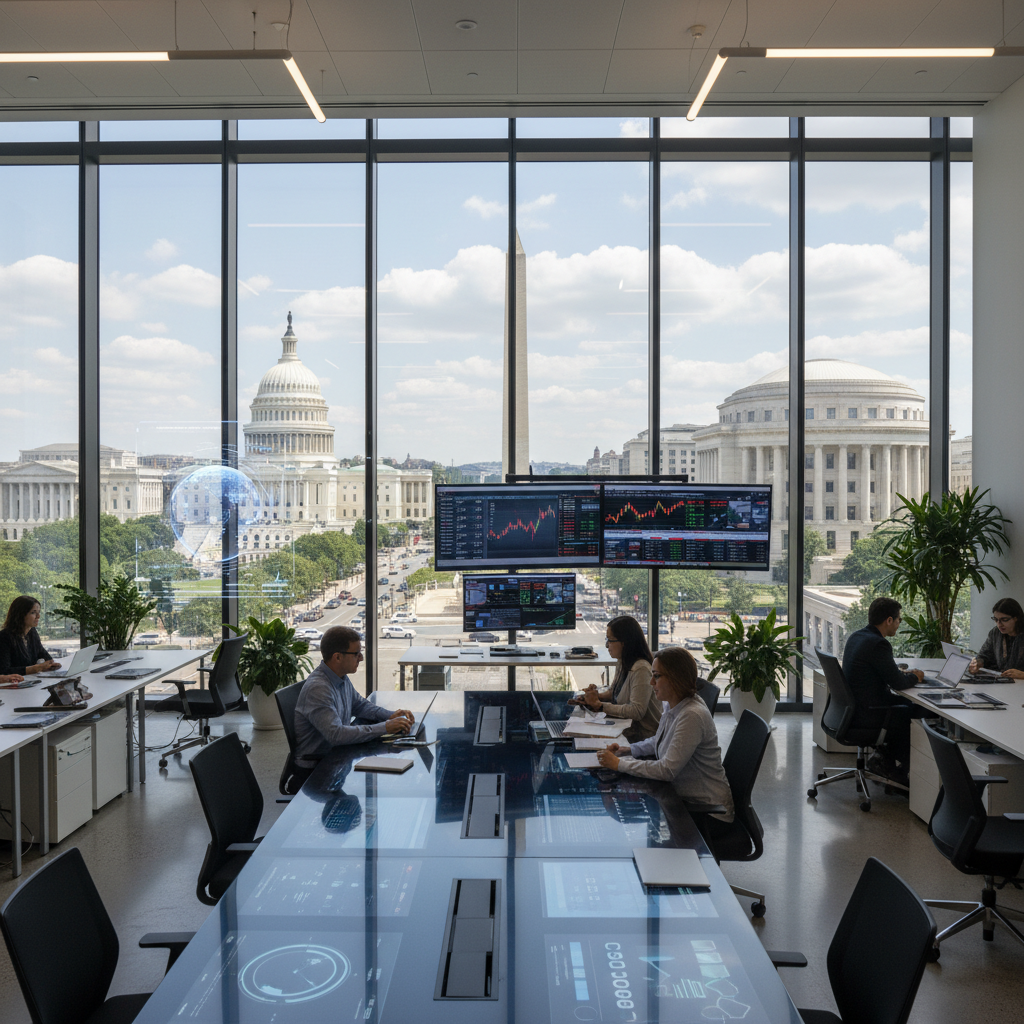
When most people think of tech centers, Silicon Valley and Seattle come to mind. But Washington D.C. has been steadily developing its own type of tech economy — one where innovation is mixed with policy, defense, and public services.
The capital is filled with more and more startups, research companies, and international technology players who realize the benefit of proximity to federal regulators and leading universities. Cloud services, cybersecurity, artificial intelligence, and data analytics are all hot businesses. Mix in a constant stream of technology talent, and D.C. is very much starting to resemble the East Coast equivalent of the West’s technology stronghold.
Why Buffett’s Moves Matter to D.C.
Berkshire Hathaway’s newfound passion for tech sends a strong signal — one that would be good for D.C. in a number of ways.
1. Investor Confidence:
When Warren Buffett makes a bet on an industry, other investors take notice. D.C. tech companies — particularly those with an emphasis on infrastructure and security — may experience an increase in venture capital and private equity attention.
2. Business Expansion:
Large players already established in D.C. may be encouraged to grow their local presence. If Berkshire-invested businesses find D.C. strategically worthwhile, they may introduce jobs, facilities, and partnerships to the area.
3. Opportunities for Collaboration
Washington D.C. is at the intersection of government and technology. When more technology companies seek to interact with federal contracts or regulatory agencies, the region becomes increasingly crucial. Buffett-backed companies might be inclined to have stronger connections with capital-based agencies.
4. Workforce Magnet:
A growing tech footprint translates into more well-paying jobs. With a robust talent pool of STEM graduates and workers in the region, D.C. can enjoy enhanced hiring and workforce development, particularly in fields such as AI, cybersecurity, and cloud computing.
The Long-Term View
What is so remarkable about Berkshire Hathaway’s fascination with tech is its focus on sustainability. While other investors have a short-term mindset, Buffalo takes the long view. That’s the same kind of thinking that many of the D.C. leaders are accustomed to: decades, not quarters.
This vision alignment — long-term planning accommodating long-term investment — may make D.C. a go-to location for future tech operations. The city is no longer the sole province of bureaucrats and policy nerds; it’s luring builders, thinkers, and technologists who wish to work where innovation and impact converge.
A Strategic Advantage
Washington D.C. provides something other areas cannot easily duplicate: access. Access to decision-makers, to contracts, to global policy discussions. That access is a strong magnet for tech firms wanting to influence not only markets, but societies.
Buffett won’t ever quite say it, but his approach is heading that way. He’s investing in the type of companies that will form the digital spine of the next economy. And a lot of those companies will require collaboration with — or within — Washington D.C.
As Buffett and Berkshire Hathaway redefine their vision of the future, Washington D.C. is paying attention. The city has long been a center of influence. It now has an increasing opportunity to be a center of innovation as well — one that frames the next generation of American technology.