- calendar_today August 31, 2025
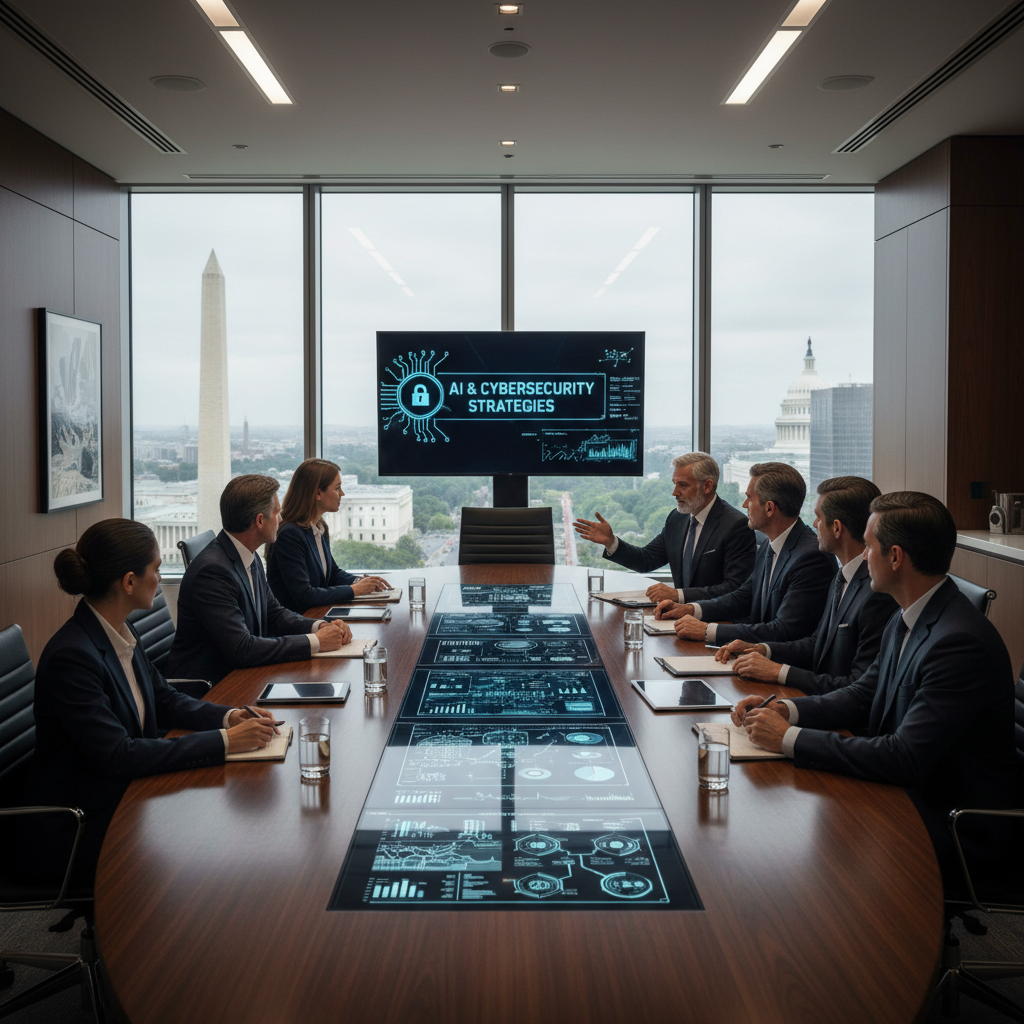
At the center of American policy and government, Washington D.C. business executives are honing their attention on two defining features of contemporary enterprise: artificial intelligence (AI) and cybersecurity. And as 2025 gets underway, CEOs in the nation’s capital are addressing these not only as tech jargon—but as essential pillars of business strategy, expansion, and risk mitigation.
From private companies to public-private partnerships, corporate leaders in industries are managing the two-part challenge of adopting innovation while safeguarding information, individuals, and reputations. In boardrooms throughout D.C., the debate is no longer if AI and cybersecurity are important—but how quickly firms can evolve to endure.
AI Is Driving Strategic Innovation—And Strategic Risk
AI is now integrated into almost every facet of contemporary business—from operations and marketing to decision-making and customer support. In D.C., where finance, consulting, law, and contracting to the government prevail, firms are leveraging AI for sophisticated analytics, automation, and even content creation.
CEOs say they realize major benefits from AI in the following domains:
- Decreasing manual labor burdens and operational expenses
- Obtaining insights from predictive analytics
- Improving customer experiences through chatbots and personalization
- Speeding up legal and compliance reviews
Yet, as useful as AI can be, leaders also see the dangers. The rapid pace of AI innovation—particularly generative AI—poses ethical questions, regulatory issues, and concerns for abuse.
Washington D.C.’s business leaders are especially wary with the federal government’s reach so close at hand. They are actively preparing internal AI use policies, establishing ethical limits, and restricting exposure to sensitive data.
Cybersecurity: The Top Business Risk in the Capital
In a city that is home to embassies, federal government agencies, and international nonprofits, cybersecurity assumes a particularly high-stakes character. Washington D.C. is a focal point for cyber attacks—not merely for political motives, but due to its high level of valuable data density.
Ransomware assaults, phishing fraud, insider threats, and data breaches continue to be prevalent. But the cyber threat landscape is changing, and CEOs are witnessing a move toward new ways of attack execution—often fueled by AI itself.
Cybercrime actors are utilizing AI to:
- Develop more persuasive phishing emails
- Initiate wiser, quicker attacks
- Bypass traditional defense tools
D.C.-based businesses now view cybersecurity as a core business function—not an afterthought for technologists. For most CEOs, cyber preparedness is directly connected to customer trust, brand equity, and compliance with the law.
AI and Cybersecurity: A Critical Intersection
Interestingly, while AI introduces risk, it also offers powerful solutions in cybersecurity. Businesses in D.C. are implementing AI-driven security tools that can detect threats in real-time, flag unusual behavior, and even respond to incidents faster than human teams can.
But this too is a two-edged sword. If AI infrastructure itself is hacked or compromised, the consequences could be disastrous. CEOs are increasingly realizing that securing AI infrastructure is as crucial as safeguarding company databases.
The convergence of AI and cybersecurity is compelling businesses to architect business strategies bearing in mind both technologies—both at once.
What D.C. Business Leaders Are Doing in 2025
To remain competitive, Washington D.C. CEOs are implementing focused strategies to adopt AI responsibly while protecting their digital infrastructure. Some of the key moves are:
1. Developing Ethical AI Frameworks
Companies are developing internal AI policies regarding data use, openness, and accountability. Certain companies have even designated “AI Risk Officers” to track emerging threats.
2. Increasing Cybersecurity Spending
Spending on IT security is growing substantially in 2025. Organizations are investing in upgrading infrastructure, acquiring cybersecurity skill sets, and performing frequent penetration testing.
3. Board-Level Engagement in Tech Decisions
Tech decisions are becoming boardroom issues. CEOs are making sure that AI and cybersecurity plans are coalesced with broader business objectives as well as shareholder expectations.
4. Continuous Employee Training
Most cyber attacks are due to human mistakes. Training is now a requirement for everyone, enabling employees to identify phishing scams, treat data with care, and know the limits of AI tools.
5. Working with Policy Makers
Having a presence in D.C. means companies have access to policymakers and federal regulations. CEOs are actively working on regulatory forums to influence and adhere to upcoming AI and cybersecurity legislation.
Regulation Is on the Horizon
One distinctive challenge for Washington D.C. companies is the heightened scrutiny and impending regulation of AI and data privacy. As Congress is actively considering AI legislation, CEOs are keeping a watchful eye on ensuring business plans align with federal requirements.
Most foresee new regulations on algorithmic transparency, consumer rights to data, and AI responsibility in decision-making. This adds another layer of sophistication to 2025 planning—but also fuels responsible innovation.
Conclusion: Innovation with Accountability
As 2025 unfolds, Washington D.C. CEOs are moving toward AI and cybersecurity with purpose and urgency. These are not IT issues—these are business-defining drivers that will determine competitive edge, public confidence, and long-term prosperity.
By investing in smart technology as part of their strategy while building digital defenses, D.C. businesses are establishing a national model for innovating with responsibility.