
- calendar_today August 8, 2025
Student Mental Health Crisis: Alarming Stats in Washington, D.C.
Current student mental health conditions challenge educational institutions regarding their responsiveness to these emergencies.
Some issue plagues educational institutions in 2025 that require immediate attention. Within school classrooms, the number of students who battle to maintain control continues to increase. The frequency of stress has dramatically increased worldwide and in Washington, D.C.
The global research team projects that mental health disorders affect approximately 45% of youth participants who are between ten and twenty-four years old. That’s nearly half a generation. The pandemic has likely worsened the situation, but this situation began developing before the pandemic started, and it will require active human intervention to resolve it.
The Numbers Say It All
The situation is not easy to overlook, as we have precise evidence. Research from Compass Health Center reveals that lifetime depression or hopelessness affects 42% of teens, while 22% consider suicide severely. The Jed Foundation reveals suicide as the second most significant reason for death among individuals between 12 and 24 years old.
It’s not just emotional. It’s academic too. University students report through research that half face academic performance stress, which severely damages their mental state. When screen addiction joins social media platforms, it makes the situation worse. According to the WHO, 12% of teenagers have gaming-related addiction symptoms, which affect their attention span and their ability to rest.
School Life Is Taking the Hit
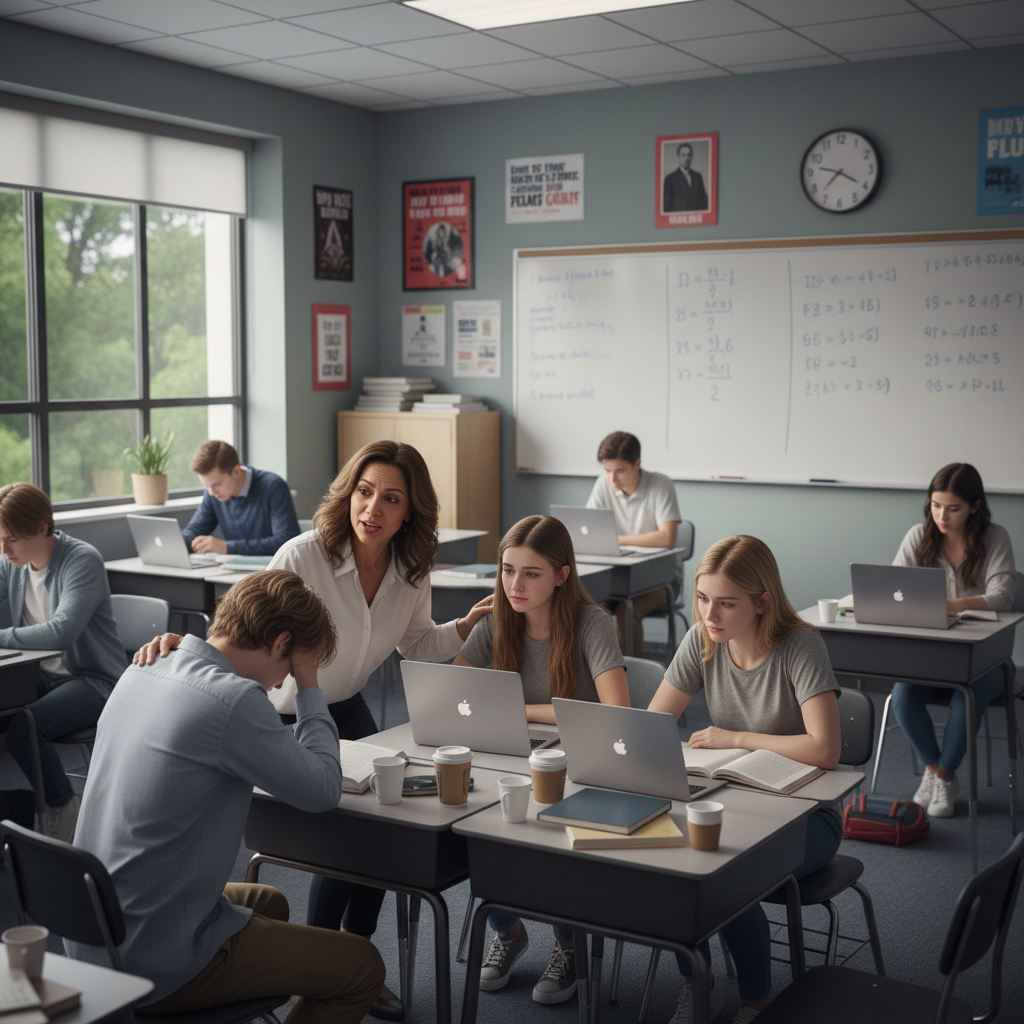
The existence of school becomes difficult for several students to manage each morning. The continuous experience of anxiety creates obstacles that stand between students and their ability to focus and complete their work and rise from bed. The number of students absent from classes has risen significantly, along with the students who have permanently left school. The educators maintain their duties to the best of their ability, but they lack credentials as counselors.
Certain educational facilities have introduced multiple mental health support approaches through counselor employment and mindfulness programs, together with peer-support structures. But the gaps are huge. The ratio of counselors serving students in numerous districts amounts to one for every 400-500 students in the school population. That’s just not enough.
Washington, D.C.: Student Mental Health Overview
Current student mental health records from Washington, D.C. show substantial psychological issues affecting young students.
The Trevor Project’s 2024 survey reveals that suicide attempts and serious thoughts of suicide affected 39% of LGBTQ+ young individuals in Washington, D.C. last year, while 14% of them tried to kill themselves.
According to the CDC’s research from 2021, Washington D.C. had 1,952 suicide-related deaths in high school students between 14 to 18 years old at a rate of 9.0 per 100,000 individuals.
The data emphasizes the necessity to provide improved mental health supports with positive school environments across educational institutions in Washington, D.C., to address the existing mental health issues encountered by students.
Mental Health Support Can No Longer Be Optional in Education
The current educational approach seems insufficient to address the matter at hand. According to experts, the educational system does not keep pace with the mental health crisis. The current funding levels are not sufficient, and limited training for teachers about student mental health stands as a major problem.
The situation requires immediate attention because university students face academic stress that affects half of their population, and suicide cases continue to increase. School officials, along with policymakers, need to prioritize mental health support in education systems now, rather than treating it as an optional matter.
Mental health service provision should be a requirement for every educational institution across the nation. Let us know your thoughts!


