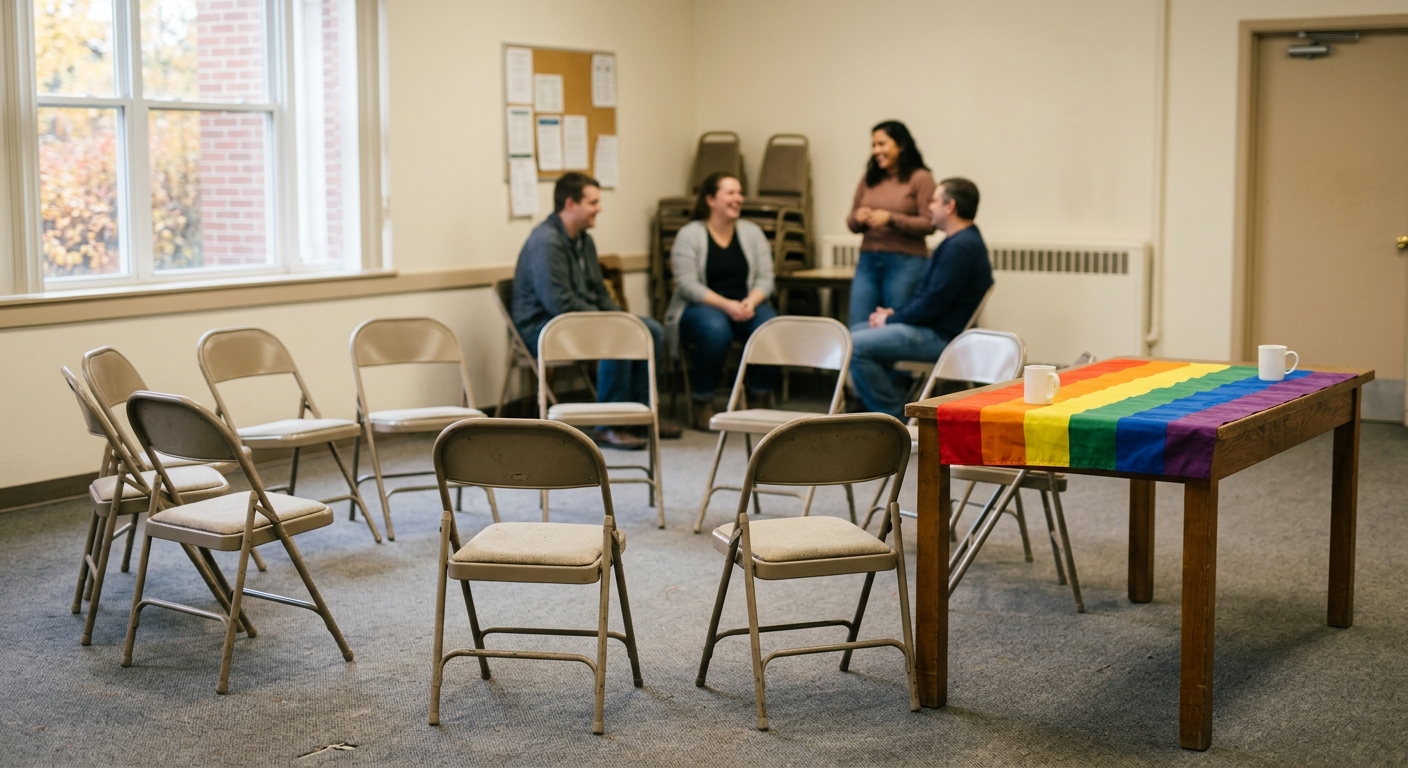
AI-generated illustration; not a photograph of the reported event.
- calendar_today August 5, 2026
The landscape of Virginia LGBTQ rights is rapidly evolving, with significant developments resonating throughout the Washington, D.C. region. Upcoming elections, proposed constitutional amendments, new community resources, and recent Supreme Court decisions are all shaping the current conversation on equality and inclusion in Northern Virginia and beyond.
Political Showdown in Virginia’s 7th Congressional District
The race for Virginia’s 7th Congressional District has drawn attention as Republican Doug Ollivant prepares to challenge incumbent Democrat Eugene Vindman, who secured his party’s nomination without opposition. This contest underscores the Virginia congressional district’s growing importance, not only for regional political dynamics but also for how national issues—including LGBTQ rights—are discussed and legislated at the local level. As the Virginia elections approach, both candidates are likely to address the concerns of diverse constituents, including LGBTQ residents whose legal protections remain a focal point in political discourse.
Debate over Marriage Equality and Reproductive Freedom Amendments
At the state level, the campaign by former Virginia Lt. Gov. Winsome Earle-Sears against proposed constitutional changes reflects deepening debates around civil rights. These amendments—one focused on marriage equality and the other on reproductive freedom—aim to align the Virginia constitution with current federal protections, providing added resilience should national jurisprudence shift. Supporters contend that a marriage equality amendment ensures enduring protection for same-sex couples, while a reproductive freedom amendment safeguards personal autonomy in health decisions. Opponents, however, argue these measures are unnecessary or overreaching. The outcome will have lasting implications for Virginia LGBTQ rights and the broader civil liberties landscape.
Equality Loudoun Community Center: A Beacon for LGBTQ Youth
This month saw the opening of the new Equality Loudoun Community Center in Leesburg. The facility marks a milestone for the LGBTQ community center movement in the Washington, D.C. area, offering a safe and affirming environment for LGBTQ youth, families, and allies. Programs focus on social support, education, and youth leadership, reinforcing the region’s commitment to belonging and acceptance. The center’s establishment comes at a time when youth in the LGBTQ community are seeking secure spaces to connect, learn, and grow amid increased scrutiny and policy challenges.
Transgender Student Athletes Face New Legal Uncertainty
Advocacy groups in Virginia and neighboring Maryland are preparing for potential changes following a recent Supreme Court ruling permitting states to enact bans on transgender student athletes competing in sports consistent with their gender identity. While neither state currently enforces trans athlete bans, the decision creates a legal opening, prompting concerns about the future of inclusion and fairness in school athletics. Local LGBTQ advocacy organizations emphasize the importance of continued support for transgender youth, noting that inclusive policies foster both mental health and educational success.
Community Response and Ongoing Advocacy
In both states, LGBTQ advocacy groups are amplifying their efforts to ensure that legislative changes do not undercut the rights and well-being of LGBTQ individuals. Legal, community, and educational initiatives are underway to offer guidance and reassurance to LGBTQ youth and families, particularly in communities spanning the greater Washington, D.C. region. These organizations also serve as early warning networks for potential local policy shifts related to LGBTQ participation in schools, athletics, and public life.
Looking Ahead: The Washington, D.C. Region as a Barometer
As the broader Washington, D.C. area witnesses shifts in law, policy, and community engagement, Virginia LGBTQ rights remain a bellwether for other states considering their own responses to changing federal and judicial landscapes. Regional stakeholders—from elected officials to grassroots organizers—are closely monitoring these developments. Their actions will determine not only legal outcomes but also the lived experiences of thousands of residents in Northern Virginia and adjoining communities. The ongoing dialogue demonstrates the area’s enduring commitment to equality, inclusion, and civic engagement at every level.