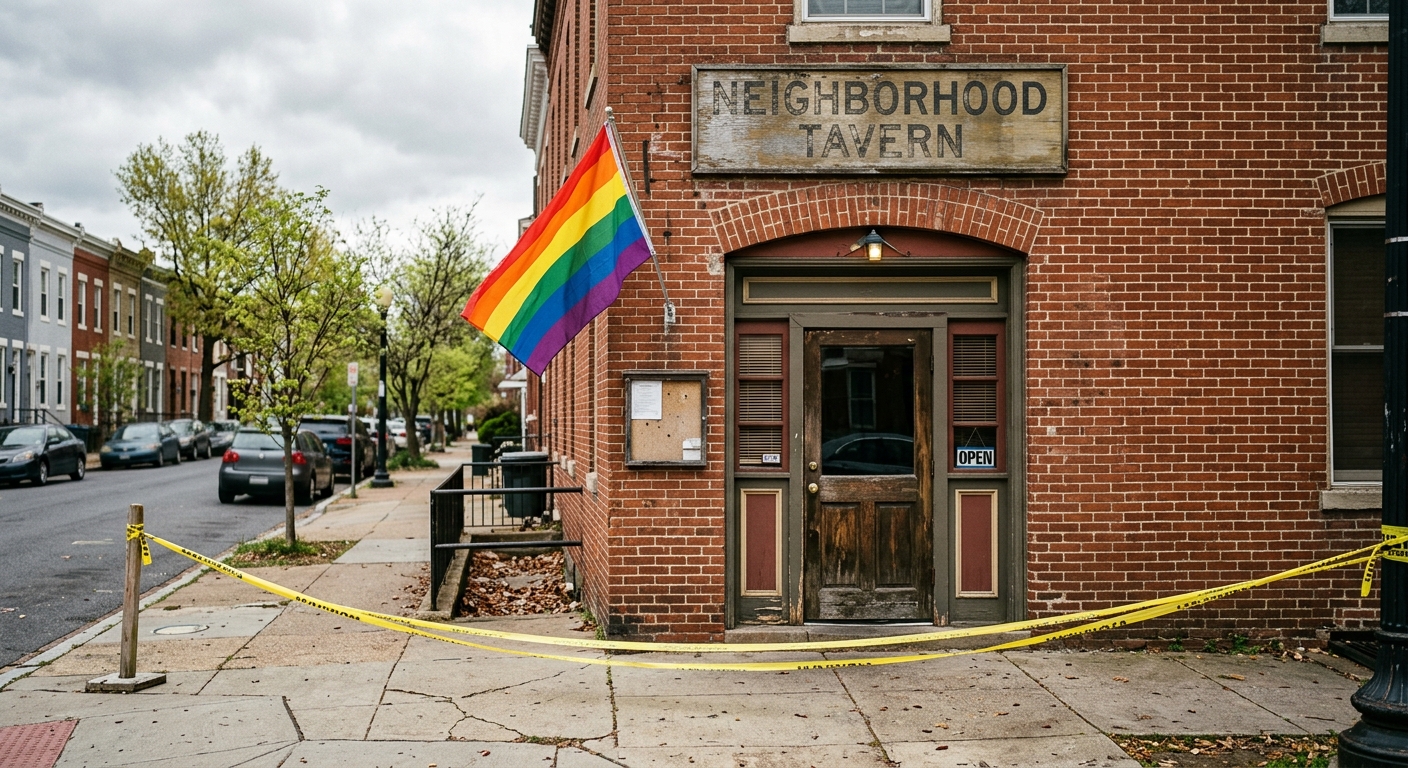
AI-generated illustration; not a photograph of the reported event.
- calendar_today July 18, 2026
A recent officer-involved shooting outside Shakey’s, a well-known gay dive bar in downtown Asheville, has intensified public focus on the ongoing debate surrounding North Carolina transgender bills in Washington, D.C. and beyond. The incident, which led to the death of Arturo Castillo Palomar, has unfolded amid significant controversy over legislation targeting the transgender community in North Carolina.
Deadly Encounter at Shakey’s Spurs Local Investigation
Staff at Shakey’s gay bar reported witnessing troubling behavior from Palomar, ultimately requesting he leave the premises. Shortly after his removal, Palomar was seen armed in the parking lot. Bar employees responded by contacting law enforcement and following established safety procedures. When police officers confronted Palomar, an exchange of gunfire resulted in his death. The Asheville shooting is now under scrutiny by the North Carolina State Bureau of Investigation, which is also examining whether the incident can be classified as a hate crime due to its circumstances and location.
Investigators Examine Possible Hate Crime Motive
The state bureau investigation aims to determine if the shooting outside Shakey’s should be prosecuted under North Carolina’s expanding framework of LGBTQ legislation. Community advocates argue that such incidents reflect a broader pattern of violence and intimidation against LGBTQ+ individuals, raising concerns about the implications of current political discourse and law enforcement responses.
Legislative Battle Over North Carolina Transgender Bills
The shooting comes as North Carolina’s anti trans legislation advances through the Republican-controlled General Assembly. Lawmakers have recently passed multiple culture war bills, targeting issues including access to gender affirming care for minors and restricting transgender student participation in school sports. These measures have ignited strong reactions from advocacy groups, who see them as a direct assault on transgender rights and the wider LGBTQ+ community.
Governor Expected to Veto Contentious Bills
Governor Josh Stein, a Democrat, is widely anticipated to issue a governor veto in response to the controversial bills. His stance is seen as a critical counterpoint to the surge in anti-LGBTQ+ measures, aligning state leadership against legislative efforts that reflect policies introduced during the Trump administration. Observers note that Stein’s expected vetoes are emblematic of the ongoing tension within North Carolina’s government, with the fate of north carolina transgender bills likely to be decided by razor-thin political margins.
North Carolina: Ongoing Political Battleground
Nationally, Washington, D.C. policymakers and advocacy organizations are monitoring these developments closely, given North Carolina’s reputation as a political battleground state. As debates over LGBTQ legislation and transgender rights surface across the country, incidents such as the asheville shooting outside Shakey’s underscore the real-world consequences of political polarization.
Community and Advocacy Response
Local and national advocacy groups have organized to oppose the new anti trans legislation, emphasizing the risks posed to vulnerable communities. Community leaders in Washington, D.C., as well as across North Carolina, have called for unity and robust support for those affected by hate-based violence. The Asheville LGBTQ+ community, in particular, has rallied for transparency, accountability, and policy reforms to address the underlying causes of such incidents.
Looking Ahead: Legal, Cultural, and Social Implications
The combination of legislative actions and high-profile incidents like the recent shooting signals the complex terrain of culture war bills currently shaping public life in North Carolina. As investigations continue and policy debates unfold, stakeholders throughout the Washington, D.C. region are likely to watch closely, recognizing the outcomes may resonate nationally. The intersection of law enforcement practices, shifting legal standards, and community activism points to an uncertain path forward on the future of north carolina transgender bills and the broader struggle for equality.