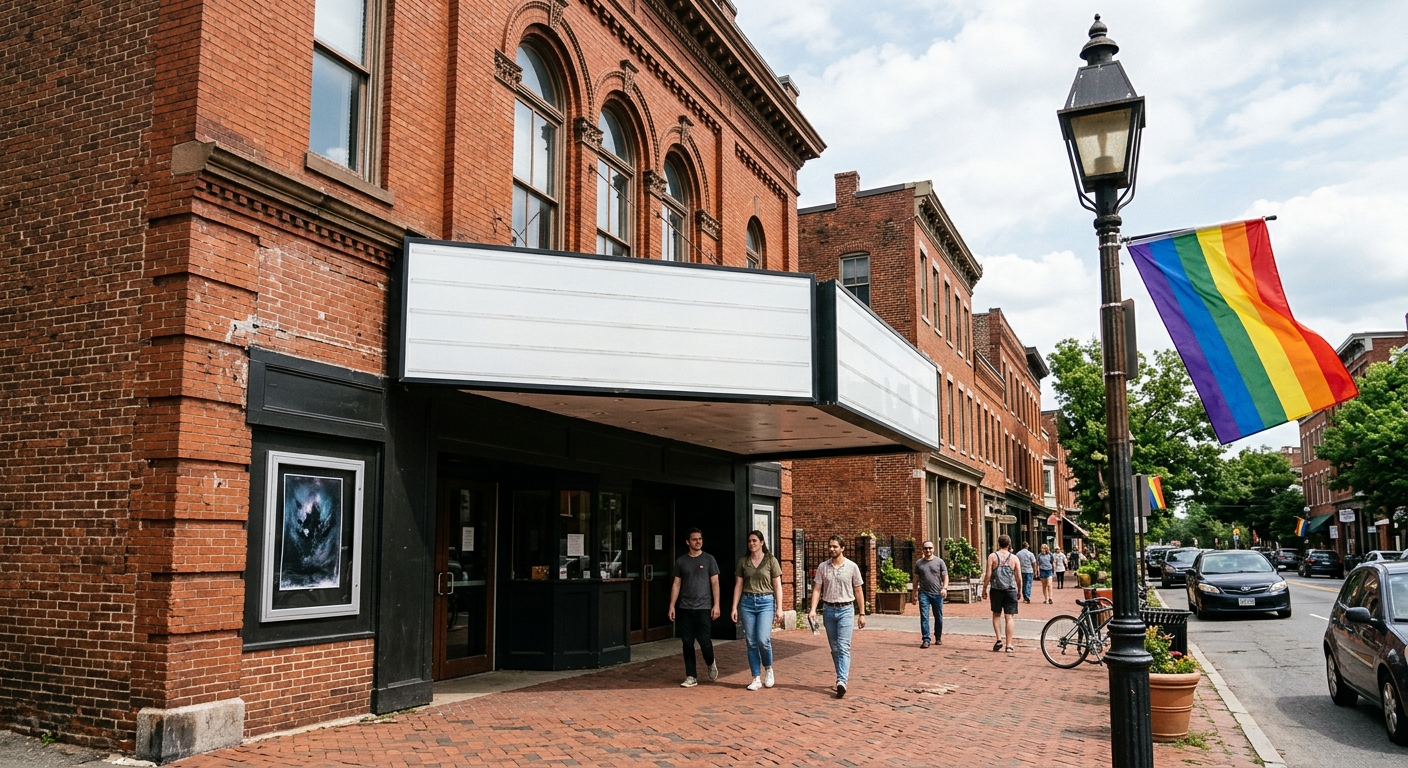
AI-generated illustration; not a photograph of the reported event.
- calendar_today July 25, 2026
Washington, D.C. — A wave of new lgbtq movies is influencing the film landscape in Washington, D.C., bringing fresh perspectives and narratives to local theaters and streaming platforms. From action thrillers to comedies and psychological horror, these works are igniting conversations about queer cinema and representation.
Bold Action and Quiet Connection: “In the Grey”
Guy Ritchie’s latest film, “In the Grey,” subverts expectations with a high-energy caper featuring a gay couple at its heart. Unlike many traditional approaches to gay representation, the relationship portrayed by Henry Cavill and Jake Gyllenhaal is understated yet profound, adding emotional resonance within the story’s brisk action. The film stands out for integrating queer love stories into popular genres without resorting to stereotypes or overt focus on sexuality.
Despite its solid performances and unique narrative blending thriller tropes with lgbtq themes, “In the Grey” reportedly lacked robust studio backing, a challenge not uncommon in the world of queer indie films. Local film enthusiasts and advocacy groups in Washington, D.C. have highlighted the importance of such projects for paving the way toward greater inclusion of lgbtq actors and stories in mainstream cinema.
Celebrating Legacy: “The Birdcage” Turns 30
Marking its 30th anniversary, “The Birdcage” remains a cornerstone of queer cinema, beloved by audiences in Washington, D.C. and across the nation. The film chronicles a gay family in Miami who confront societal prejudice and familial challenges with humor and heart, reinforcing that a family is defined by unconditional love rather than rigid social norms. Its enduring popularity speaks to the power of both queer storytelling and representation, inspiring a generation of filmmakers to follow.
The film continues to influence contemporary lgbtq film reviews, reminding viewers and creators alike of the need for nuanced, joyful portrayals of queer love and family.
Comedy with a Twist: “She’s the He”
For those seeking lighter fare, the new teen comedy “She’s the He” reimagines the coming-of-age narrative. Through a primarily queer cast, the film subverts classic tropes surrounding gender and sexuality, offering a raunchy yet heartfelt look at identity, friendship, and self-discovery. Local educators and community organizations in the Washington, D.C. region have noted how the film acts as a touchstone for youth exploring their place in a rapidly changing world.
The film’s feminist outlook, combined with a playful sense of humor, has made it a standout among this year’s transgender films and queer indie projects.
Exploring Trauma and Healing: The Psychological Impact of “Camp”
Horror takes a bold, emotional turn in “Camp,” a film that confronts queer trauma with a uniquely feminine lens. Unfolding in a surreal, dreamlike atmosphere, the story explores themes of guilt, pain, and resilience, examining the lingering effects of discrimination and rejection on queer individuals. Critics from Washington, D.C. and beyond have praised “Camp” for its unflinching approach to these issues and its innovative visual style, expanding the boundaries of what lgbtq movies can achieve artistically.
This psychodrama has also earned acclaim within circles focused on both queer trauma and the advancement of queer storytelling that addresses complex psychological realities.
Shaping the Future of Queer Cinema
Each of these films contributes uniquely to the evolving landscape of lgbtq movies. As demand rises in vibrant regions like Washington, D.C., local theaters and film institutions are increasingly programming screenings and talks centered around queer love stories, diverse genres, and the work of lgbtq actors. These films not only entertain, but also provide vital avenues for visibility and dialogue within the community.
Community Impact and the Role of Reviews
The surge in lgbtq film reviews from regional critics has highlighted the growing appreciation for authentic storytelling and the crucial need for representation behind and in front of the camera. Whether through queer indie films, mainstream releases, or new transgender films, Washington, D.C. remains at the forefront of championing inclusive cinema that appeals to and reflects a broad spectrum of identities.
As these stories continue to unfold, the region’s commitment to supporting lgbtq themes and queer storytelling ensures that the future of queer cinema in Washington, D.C. remains bright and full of promise.