- calendar_today August 7, 2025
Board Games May Get Pricier as Import Costs Skyrocket
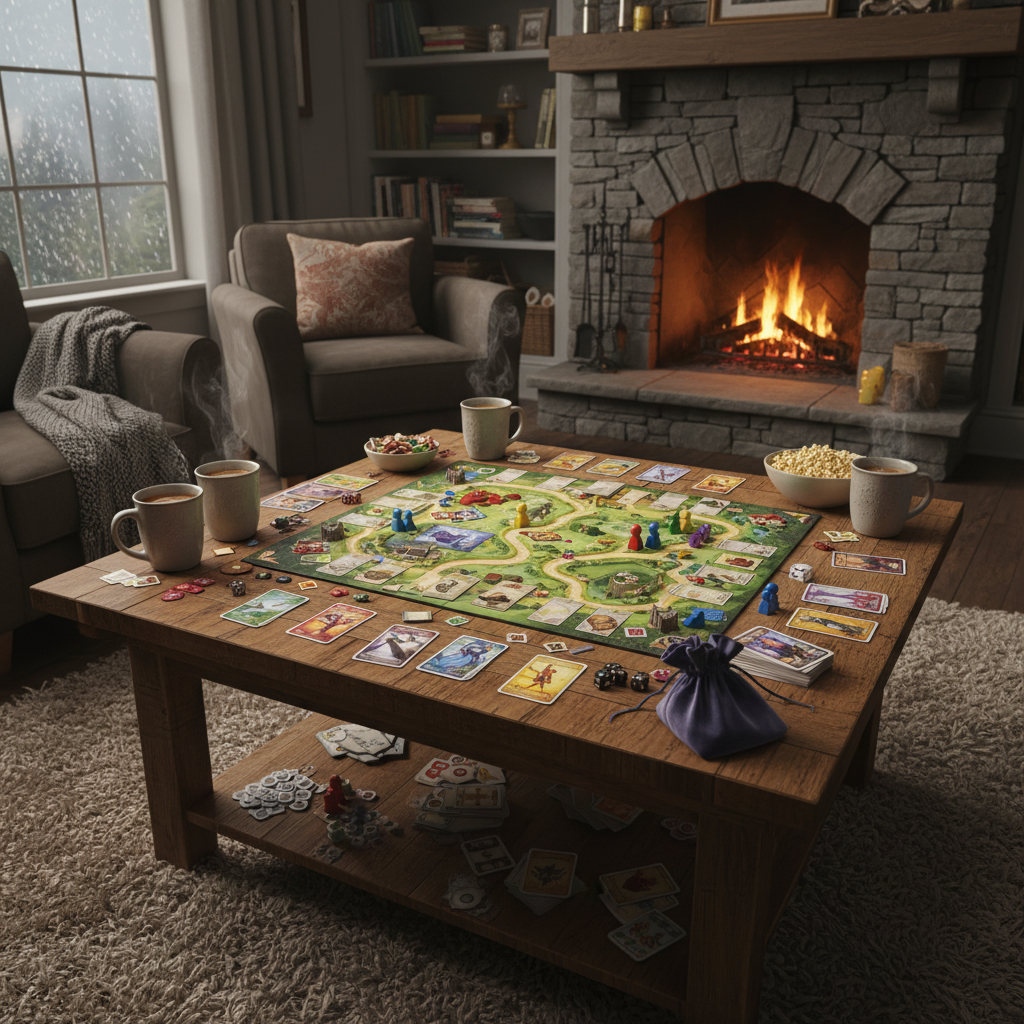
The board game industry, an inventive one marked by small margins and community spirit, has taken a major financial hit that many insiders fear could put their livelihoods—and the health of the industry at large—in serious jeopardy. Designer Jamey Stegmaier, whose games include the bestselling Scythe and Wingspan, vented his frustration earlier this week about a newly announced 54 percent import tariff on goods made in China and shipped to the United States.
“I tried to work on a new game I’m brainstorming last night,” Stegmaier wrote in a lengthy blog post, “but it’s tough to do that when that future looks so grim. I mostly just found myself staring blankly at the enormity of the newly announced 54 percent tariff.” A designer whose games sell millions of units around the world, Stegmaier is not one to lay his personal business affairs bare. In doing so, this time, he was not only uniquely candid. He was also not alone.
China or Bust?
If you’re a U.S.-based publisher of tabletop games, and you’re making your games overseas, it’s a good bet you’re manufacturing in China. Germany is also a popular place for board game production, not least because Germany is sort of the spiritual birthplace of the modern tabletop gaming movement. But when Stegmaier talks about producing a modern, full-color, full-component game in Europe, it’s still unlikely he’s talking about Germany or the Czech Republic or Poland. It’s China. Printed cards, sure. Custom plastic miniatures, wooden tokens, die-cut boards, specialty dice… You name it.
You can do that sort of thing at home, sure, but the laws of economic scale make it prohibitive. Stegmaier once had a U.S.-based manufacturer quote him $10 for an empty game box. A box! That’s a price point you can buy a game for, assembled and boxed and shrinkwrapped, made in China. And that’s one of the reasons the newly announced tariff, a whopping 54 percent, is such a disruptive force. U.S. board game publishers, most of them small to midsize and all of them operating on slim margins, have just seen the price of what they do go up by more than half, with no warning and no lead time.
Industry Reaction
Meredith Placko, CEO of Steve Jackson Games, has sounded a similar alarm. The company’s flagship line, Munchkin, is one of the best-selling games of all time. Jackson has written about the industry for years and works overseas for the same reasons the industry at large does.
“The truth is that some people ask, ‘Why not manufacture in the US?’ ” Placko wrote on her company blog. “I wish we could. The truth is that even though some small-scale manufacturing capacity exists here, the infrastructure to support full-scale boardgame production—specialty dice making, die-cutting, custom plastic and wood components—doesn’t meaningfully exist here yet. I’ve gotten quotes. I’ve talked to factories. The willingness is there in some cases, but the equipment, the labor, and the timelines simply aren’t.”
In a sign of just how foundational this manufacturing strategy is to how the industry does business, she concluded by writing that the new policy, “is not just a policy change. It is, I fear, a seismic shift for the entire industry.”
Rob Daviau, co-founder of Restoration Games and designer of the hit Pandemic Legacy, is also speaking out. He’s been more vocal than most, writing on social media for months now that he feels “every business meeting is an existential crisis about our industry.” He’s put the timeframe of a potential collapse of the industry at the one to two year mark, and in a recent interview with BoardGameWire predicted a “great collapse in the hobby gaming market in the US if such tariffs are ever implemented.”
Gamers Beware
It’s not just publishers and designers who will likely suffer. Gamers could soon start to feel the pinch of the policy as well. Retail prices for new games will likely go up. Lower production values are a possibility if publishers try to squeeze the numbers by skimping in areas to maintain current pricing. Companies could also decide to slow down or trim new releases in response.
Local game stores, the lifeblood of the industry but an already threatened one with the rise of online sales, could also suffer as gamers rely on their backlogs of games, many of which they bought but never got around to play and are left to gather dust on the so-called shelves of shame, or simply purchase online to get a better deal.
“Within a few months, US companies will lose a lot of money and/or go out of business,” Stegmaier wrote. “And US citizens will suffer from extreme inflation.”
Limited Relief
Ways to work around the tariffs are limited, and would not really impact American companies in any way that makes a meaningful difference. “I am hearing from companies that they’ll have to redirect shipments through non-US distributors,” Stegmaier wrote, pointing out that, say, European markets, which would not be subject to the tariffs, are small in comparison to the domestic one. “For us, 65 percent of our sales are in the US. Our numbers are still going to be horrific.”
Worse still, some publishers will be hit by the tariffs, and by this new future reality, much harder than others. For games that are still in the design or early production stage, there’s some flexibility, at least, in rejiggering the budget to account for the new expense. But companies like Stegmaier’s, which have games that are already in production and en route from China, have no such recourse. “I have 8,000 games leaving a factory in China this week,” Chris Solis, head of the California-based Solis Game Studio, told BoardGameGeek. “Need to scramble to cover the import bill.”
GAMA: Industry Voices Heard?
The Game Manufacturers Association, the trade group that represents board game publishers, has been lobbying against the tariffs, but so far to no avail.
In the meantime, an industry that, at its heart, exists to bring people together around things they love is staring down what looks to be an existential threat.