- calendar_today August 10, 2025
Smoke damage haunts the MJT after the July 8 fire.
The Museum of Jurassic Technology, one of Los Angeles’ weirdest and most beloved cultural institutions, suffered a serious fire that caused extensive damage to the building late last month. A late-night fire on July 8 destroyed the museum’s gift shop, with smoke damage also found across many of its exhibits. Estimated losses in revenue during the museum’s temporary closure are estimated to total $75,000, with hopes that it will reopen sometime next month.
Los Angeles’ Own ‘Fake’ Museum May Be Closing, Residents Urge Support
Founded in Culver City in 1988 by David Hildebrand Wilson and Diana Drake Wilson, the Museum of Jurassic Technology (MJT) has been a small but special part of LA culture for decades. Despite (or perhaps because of) its deliberately bewildering and occasionally dubious exhibitions, the museum has long attracted visitors from around the world. Purported to be “dedicated to the advancement of knowledge and the public appreciation of the Lower Jurassic,” very little at the MJT has anything to do with the Lower Jurassic or with science at all.
Instead, the museum has drawn significant inspiration from the cabinets of curiosity (wunderkammers) of the Renaissance period, early predecessors to museums in their own right. These eclectic collections of the strange, exotic, and macabre could be found in the homes of wealthy aristocrats throughout Europe. The goal was often as much to dazzle and delight as it was to provide edification.
Accompanied by dramatic (and sometimes bizarre) text panels, the MJT often similarly plays with the fine line between fact and fiction. Some of the pieces are simply faithful historical recreations, while others are complex blends of reality and imagination that can leave even the savviest museum-goer uncertain of what is and is not “real.”
Some of the most enduring of the museum’s permanent exhibitions focus on the actual work of historical figures such as Athanasius Kircher, a Renaissance polymath and Jesuit priest, or ultra-miniature sculptor Hagop Sandaldjian, an Armenian artist. Sandaldjian’s miniature sculptures, so small that they’re displayed on the inside of the eye of a needle, are often made of just one human hair.
Others, though, are more baroque. One room features decomposing dice that once belonged to the magician and actor Ricky Jay, while another provides a visual survey of trailer parks in the Los Angeles area, an installation entitled “The Garden of Eden on Wheels.” Elsewhere, one can find stereographic radiographs of flowers, microscopic mosaics of butterfly wing scales, and collections of letters penned by amateur astronomers to the Mount Wilson Observatory between 1915 and 1935.
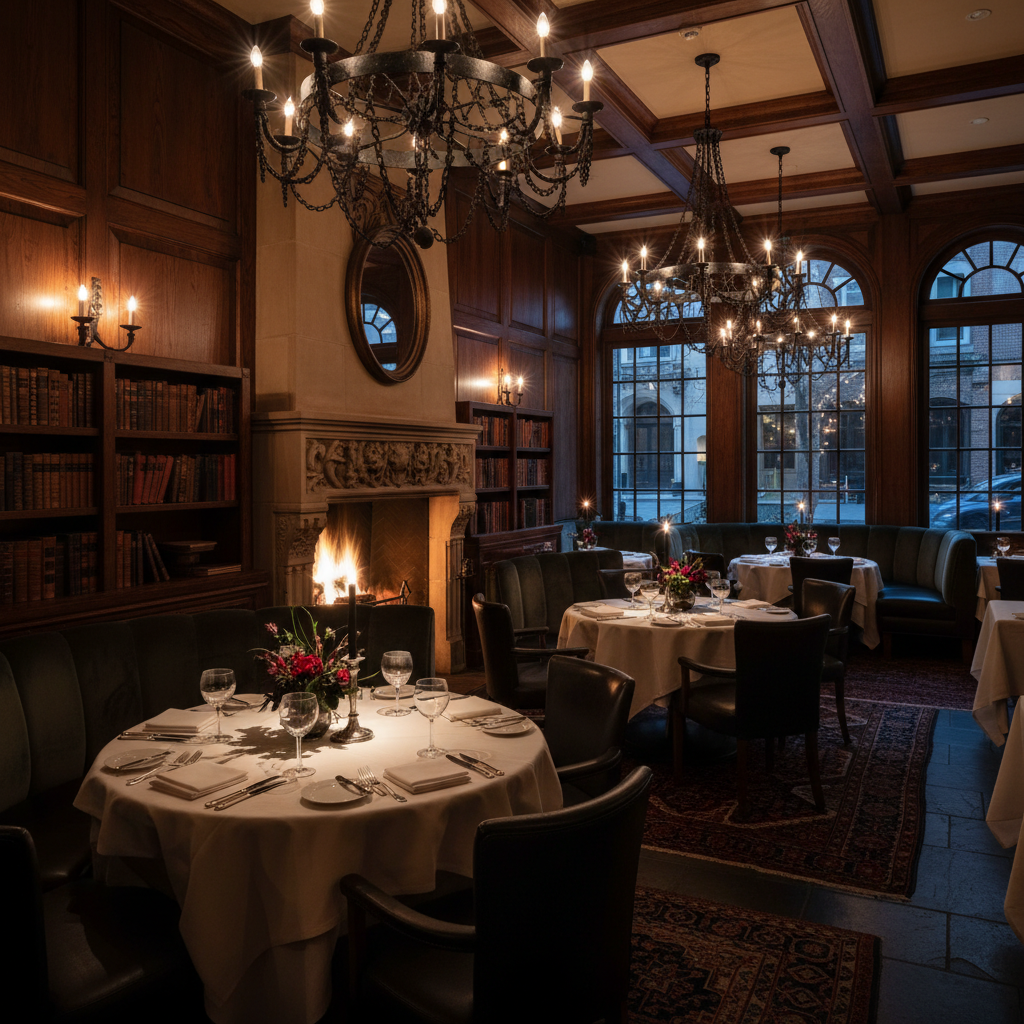
Since 2005, the MJT even included a Russian tea room that was designed to resemble Tsar Nicholas II’s study in the Winter Palace in St. Petersburg.
Fire and the Aftermath
A detailed report on the fire, published by writer Lawrence Weschler, whose 1996 book Mr. Wilson’s Cabinet of Wonder is in some ways a comprehensive history of the MJT itself, was first discovered by museum founder David Wilson himself. Wilson lives in a home directly behind the museum and was the first on the scene after the fire. Noticing the glow of flames, Wilson first “raced up the hill, extinguisher in hand, to get closer to the building.” Once there, however, he was met by “a ferocious column of flame… climbing up the corner wall that faces the street.”
Realizing that the extinguishers he had would not be sufficient to quell the fire, Wilson’s daughter and son-in-law later arrived on the scene with a larger extinguisher, which managed to contain the blaze just before the firefighters arrived. Wilson was later told by the firefighters that had they arrived one minute later, the entire building would almost certainly have been lost.
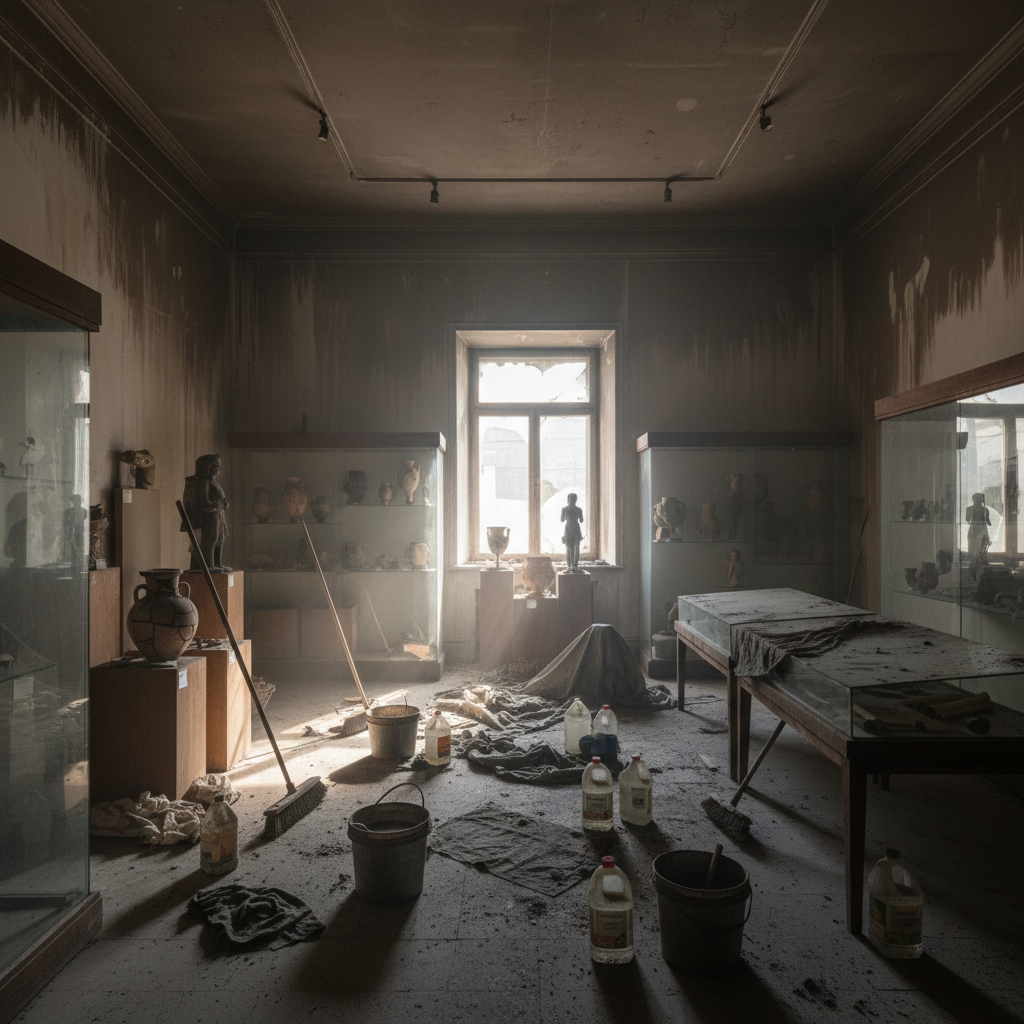
Thankfully, most of the structural damage was contained to the gift shop, but smoke damage was found across the building. Wilson would later recall the smoke-damaged museum as looking like a “thin creamy brown liquid… evenly poured over all the surfaces—the walls, the vitrines, the ceiling, the carpets, and eyepieces, everything.” Smoke infiltration is a huge concern, especially for an institution that takes such pride in its exhibition. Museum staff and volunteers have since been working around the clock to clean and repair the building, with Weschler describing the process as slow and laborious.
In the meantime, Weschler has implored supporters to donate to the museum’s general fund to help recoup some of the lost revenue and support restoration efforts. “This is one of the most truly sublime institutions in the country,” Weschler wrote of the museum, “precious in the extreme, a place so sui generis and sui dirae (literally, ‘of its kind,’ ‘of its dread’) that it stubbornly refuses to be called anything.”
There is hope that the MJT will return to its normal, odd operations once the cleaning and restoration process is complete. Though an exact date for reopening has yet to be announced, its pastiche of pastiche, blending of satire and erudition, and sheer surrealism will doubtless survive.