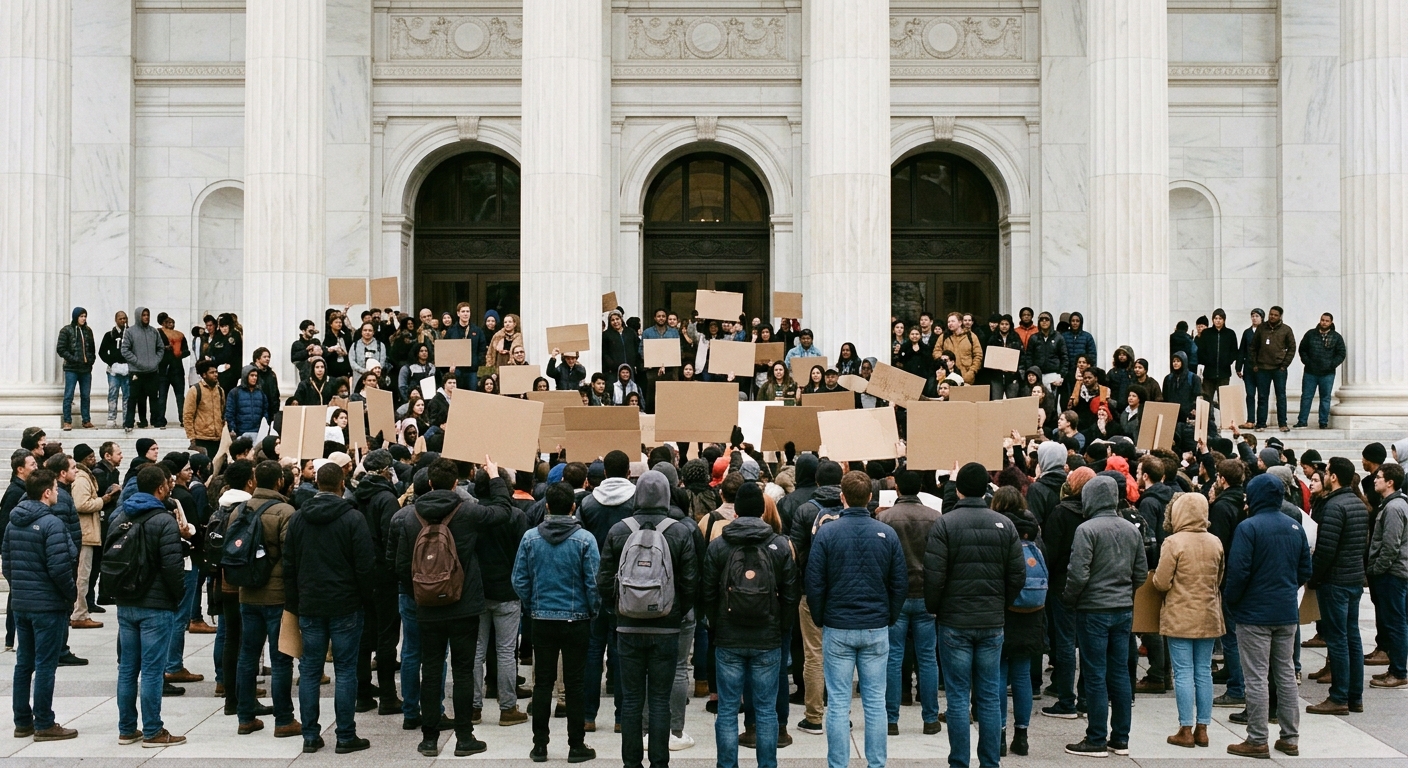
AI-generated illustration; not a photograph of the reported event.
- calendar_today September 19, 2026
WASHINGTON, D.C. — More than 2,000 participants converged on the nation’s capital for a major kennedy center protest on September 18, 2026, as concerns mount over political threats to one of the region’s prime cultural institutions. Local residents, artists, and civic leaders gathered in solidarity around the John F. Kennedy Center for the Performing Arts, determined to defend its role as a pillar of the Washington, D.C. arts scene.
Hands Around Kennedy: Uniting for Artistic Integrity
The protest, famously dubbed Hands Around Kennedy, encircled the storied venue with a human chain, symbolizing community resolve to guard the kennedy center from external interference. The demonstration, organized by advocacy group Hands Off the Arts and co-hosted by noted drag performer Tara Hoot, underscored both the urgency and diversity of the coalition supporting the center’s artistic mission.
Political Controversy Fuels Outcry
Tensions reached a peak following a wave of donald trump threats to close, rename, or even demolish the renowned performing arts center. Recent months saw the board—under the sway of former President Trump—temporarily rename the Kennedy Center in his honor. This center renaming was met with broad public rebuke and was ultimately revoked by judicial intervention. For many Washington, D.C. residents, the incident exemplified the danger of politicizing legacy institutions and ignited widespread activism.
Celebrating the Power of Performance
Attendees at the kennedy center protest enjoyed rousing performances, including a moving appearance by the Gay Men’s Chorus of Washington. This artistic display, co-led by Tara Hoot, served as both cultural enrichment and a testament to the power of free expression amid uncertainty. The event spotlighted not only the vibrancy of the center’s offerings but also the resilience of the regional arts community.
Art Censorship and Community Backlash
Protesters voiced frustration at growing reports of art censorship and political meddling that have led to the cancellation of several performances in recent years. Many called attention to the Kennedy Center’s fiscal and structural struggles, noting public reports of budget shortfalls and looming bankruptcy risks. Speakers—including U.S. Representatives Don Beyer and Jonathan Jackson—insisted that Washington, D.C. cannot afford to lose a resource with such cultural and educational influence.
Hands Off the Arts: Organization and Local Stakeholders
The advocacy group Hands Off the Arts amplified the call for continued vigilance. Through collaboration with established cultural organizations and concerned citizens, the group has galvanized efforts to protect the Kennedy Center’s independence. Organizers encouraged support for ongoing petition drives and legislative actions designed to shield the performing arts center from further threats.
Cultural Preservation as a Regional Imperative
In speeches and performances, participants emphasized the urgent need for cultural preservation in Washington, D.C. The protest reinforced the Kennedy Center’s status as more than a venue; it serves as a cornerstone for civic engagement, artistic innovation, and educational advancement in the region. Leaders called for continued advocacy, reminding attendees that safeguarding the Kennedy Center’s future also means upholding the values of creative freedom and public service that define Washington, D.C.’s character.
Looking Forward: Protecting Artistic Freedom
As the event concluded, organizers and attendees pledged to maintain their activism for the protection of the Kennedy Center and all institutions threatened by political interference. The kennedy center protest marks a defining moment in the broader movement for artistic autonomy and underscores the ongoing battle against art censorship. Washington, D.C.’s cultural community remains committed to securing the future of its flagship performing arts center—and ensuring it continues to inspire generations to come.