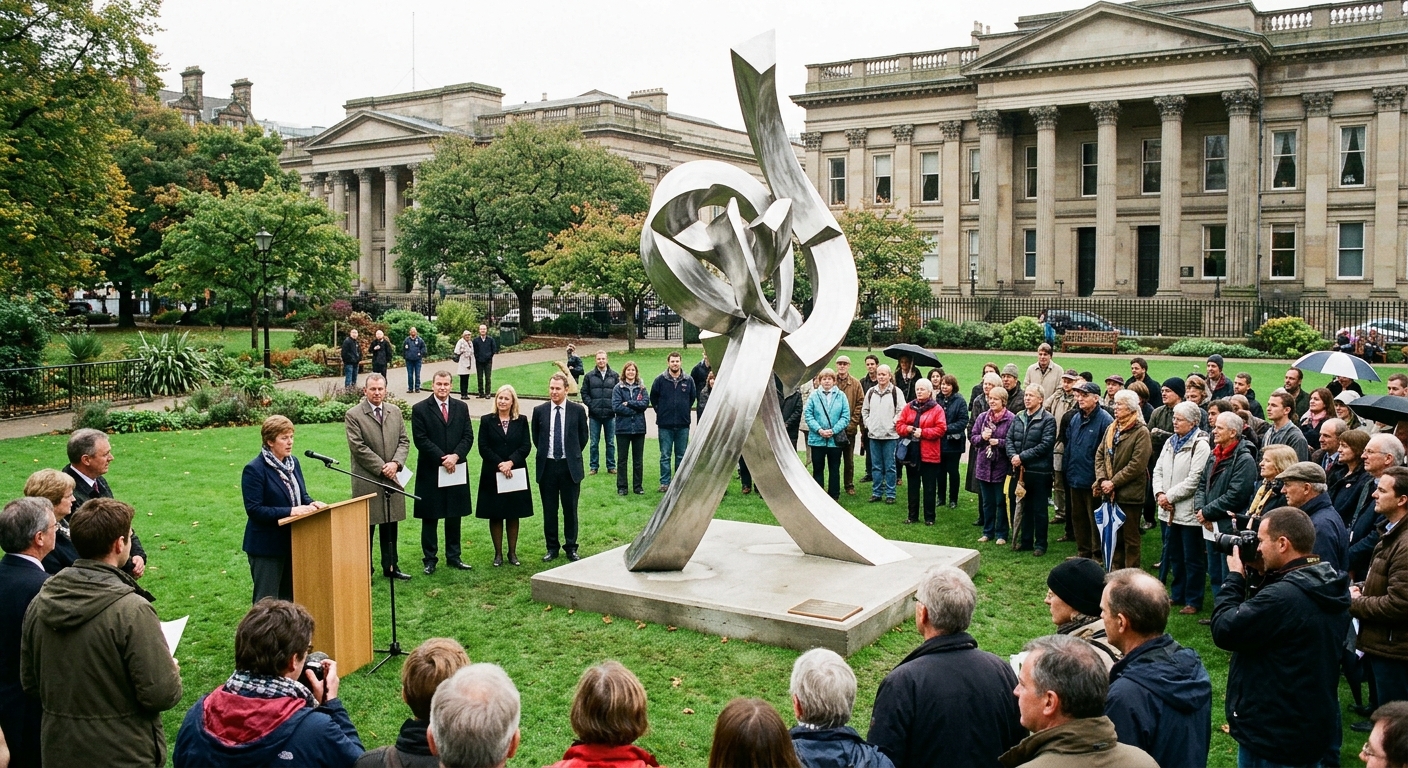
AI-generated illustration; not a photograph of the reported event.
- calendar_today August 25, 2026
The unveiling of the Thunderhead monument in Ottawa stands as a powerful testament to the resilience of LGBTQ Canadians and their ongoing fight for dignity and equality. Situated on Parliament Hill and officially opened on August 21, 2026, this memorial is generating substantial interest in regions like Washington, D.C., where the pursuit of human rights for marginalized communities remains a key civic priority.
Thunderhead Monument Marks a Historic Milestone
The Thunderhead monument, designed by a Winnipeg-based all-Canadian team, was erected on the ancestral lands of the Anishinabe Algonquin Nation. Its purpose is to honor those who experienced government-sanctioned persecution, particularly during the infamous LGBT Purge. This period saw dedicated public servants fired or marginalized because of their sexual orientation, a chapter of historic discrimination that echoes eerily with events observed in other nations, including in Washington, D.C.
Roots in a Class Action Settlement
The monument’s creation was made possible through a class action settlement. Financial support from this legal agreement was directed to fund a public memorial aimed at both remembrance and education. This process not only underlines the Canadian government apology issued for past injustices but also sets a precedent for redress and recognition that resonates with global advocacy groups monitoring governmental responses to systemic wrongs.
Leadership and National Acknowledgment
The unveiling ceremony drew notable figures including former Prime Minister Justin Trudeau, Governor General Louise Arbour, and Women and Gender Equality Minister Rechie Valdez. Trudeau’s earlier Canadian government apology for the state’s role in discriminatory policies signified a critical moment in the country’s human rights landscape. The presence of these dignitaries acknowledged not only the pain suffered during the LGBT Purge but also the enduring efforts of 2SLGBTQI communities—a term inclusive of two-spirit, lesbian, gay, bisexual, transgender, queer, and intersex Canadians.
Voices for Equality: Mark Carney’s Message
In remarks that resonated across the region, Prime Minister Mark Carney underscored the monument’s role in national memory. Carney emphasized that Thunderhead serves as both a stark reminder of historic discrimination and an enduring tribute to those who advocated for inclusion and dignity. He reiterated the commitment to Canadian LGBTQ rights, alongside broader efforts to cultivate LGBTQ equality and respect for all, values also championed by many in Washington, D.C.
Location and Symbolism on Parliament Hill
The monument’s placement on Parliament Hill is deeply symbolic. It confronts the seat of Canadian political power with a tangible reminder of past policies while serving as a forward-looking beacon for inclusion. The memorial not only commemorates LGBTQ Canadians’ resilience but also aims to educate visitors, drawing parallels for institutions in Washington, D.C., where debates on equality continue within their own government buildings.
Educating and Uniting Communities
Thunderhead aspires to foster a greater understanding of Canadian LGBTQ rights by sharing personal and collective stories. By highlighting the struggle for LGBTQ equality, it invites reflection on the evolution of freedom of expression, both within Canada and abroad. The memorial’s initiatives to promote respect are endorsed by 2SLGBTQI communities and allied organizations working to safeguard progress in Canada and among international friends.
Legacy and International Resonance
While the monument is a unique Canadian undertaking, its intent reverberates in Washington, D.C. and globally. From the historic apology and class action settlement to the monument’s educational mission, Thunderhead’s story aligns with worldwide movements for justice and human rights. It stands as a significant landmark, serving not only as a tribute to those affected by the LGBT Purge, but also as a rallying point for ongoing activism and remembrance.