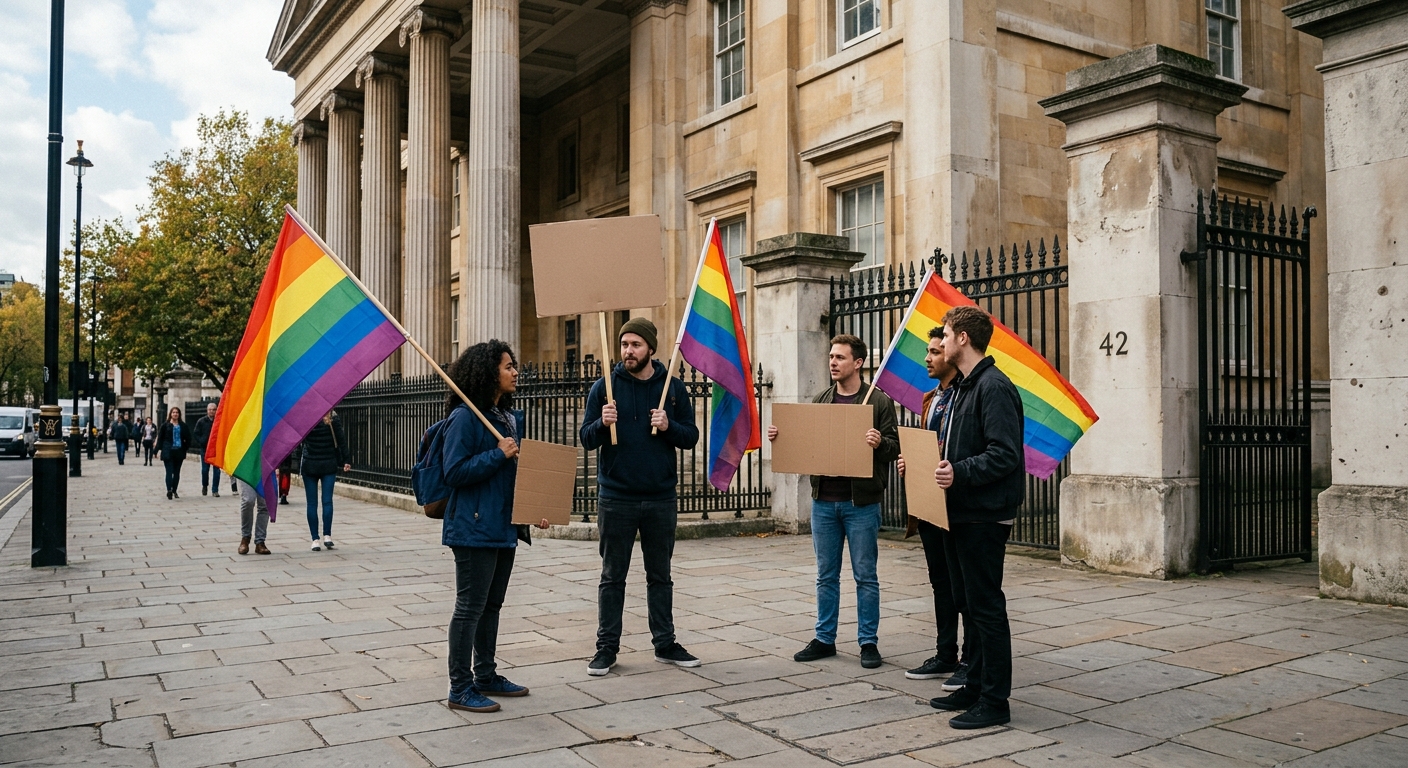
AI-generated illustration; not a photograph of the reported event.
- calendar_today September 16, 2026
WASHINGTON, D.C. – The recent turkey lgbtq crackdown has prompted widespread concern among political leaders and human rights advocates in Washington, D.C., as Turkish authorities intensified their campaign against LGBTQ individuals across the nation. Over 150 people were detained outside an Istanbul courthouse following protests challenging coordinated lgbtq raids targeting activists, organizations, and businesses.
LGBTQ Raids Ignite Istanbul Protests
Large-scale lgbtq raids were launched under the government’s “My Family is Safe” initiative, causing immediate backlash and sparking istanbul protests. Advocacy groups reported at least 112 individuals detained in these operations, with 62 arrests and 16 activists linked to LGBTQ associations among those charged. The severity of the legal action, especially against trans women, intensified fears that such policies aim to curtail lgbtq activism.
Turkish Authorities Expand Restrictions
Turkish authorities have expanded their efforts to suppress LGBTQ communities, leveling prostitution charges and invoking morality laws as a basis for detaining activists. Legal experts and human rights defenders argue these measures are designed to criminalize lgbtq rights activity rather than address genuine public concerns. “By framing legitimate activism under the scope of morality, authorities shift focus from deeper political and economic challenges,” noted one civil society observer familiar with policy trends in the region.
Global Reactions from Lawmakers and Allies
International condemnation swiftly followed the recent crackdown, with U.S. lawmakers and European officials voicing alarm over escalating turkey lgbtq discrimination. In Washington, D.C., political figures emphasized the importance of defending free expression and human rights. Calls have grown for Turkish policymakers to reconsider their stance and ensure that justice and equality extend to all citizens.
Impact on Tourism: The Gay Cruise Ban
In a parallel move, Turkish officials denied docking rights to the Scarlet Lady, a gay cruise ship slated to visit Turkish ports, citing societal and moral issues. The gay cruise ban was sharply criticized by cruise operators and entertainers, who highlighted the economic repercussions and derided the move as discriminatory. The restriction has reignited debates about Turkey’s willingness to foster inclusive tourism, drawing attention from travel associations as well as LGBTQ rights groups.
Persistent Struggles for LGBTQ Rights
Turkey’s history of suppressing lgbtq rights is marked by incidents where Pride parades have been met with forceful police interventions and outright bans under President Recep Tayyip Erdoğan’s administration. Activists accuse authorities of leveraging public morality narratives to justify restrictions and to marginalize lgbtq activism. The use of charges such as prostitution and morality offenses remains controversial, both within Turkey and among international observers.
Washington, D.C.’s Advocacy and Outlook
Civil society groups and prominent individuals in Washington, D.C. continue to speak out against turkey lgbtq discrimination and champion global human rights protections. Their involvement highlights deepening ties between advocacy communities in Northern America and those impacted by legislation and enforcement abroad. As calls for accountability mount, the mounting evidence of attempts to stifle lgbtq activism and expression draws significant scrutiny on Turkey’s international reputation.
Looking Ahead
Ongoing protest movements and advocacy efforts reflect persistent demands for equality by the LGBTQ community and their allies, both in Turkey and internationally. With events such as lgbtq raids and the gay cruise ban drawing widespread attention, regional and global stakeholders are expected to monitor developments closely as pressures build for reform and protective policy changes.