- calendar_today August 13, 2025
In 2025, Washington State’s commercial real estate (CRE) market is adjusting to a new post-pandemic normal. While Seattle’s tech-heavy office market continues to reset, the broader market is buoyed by growing demand for life sciences, industrial facilities, and mixed-use suburban development. Developers and investors are adapting to a high-cost, high-opportunity environment shaped by rising construction expenses, evolving work patterns, and the state’s fast-changing demographics.
Washington’s commercial landscape is now defined by contrasts: tech versus biotech, urban versus suburban, and speculative capital versus cautious repositioning. Here’s a deep dive into the major trends shaping Washington’s CRE recovery in 2025.
1. Industrial and Logistics Stay Hot—Especially in Inland Markets
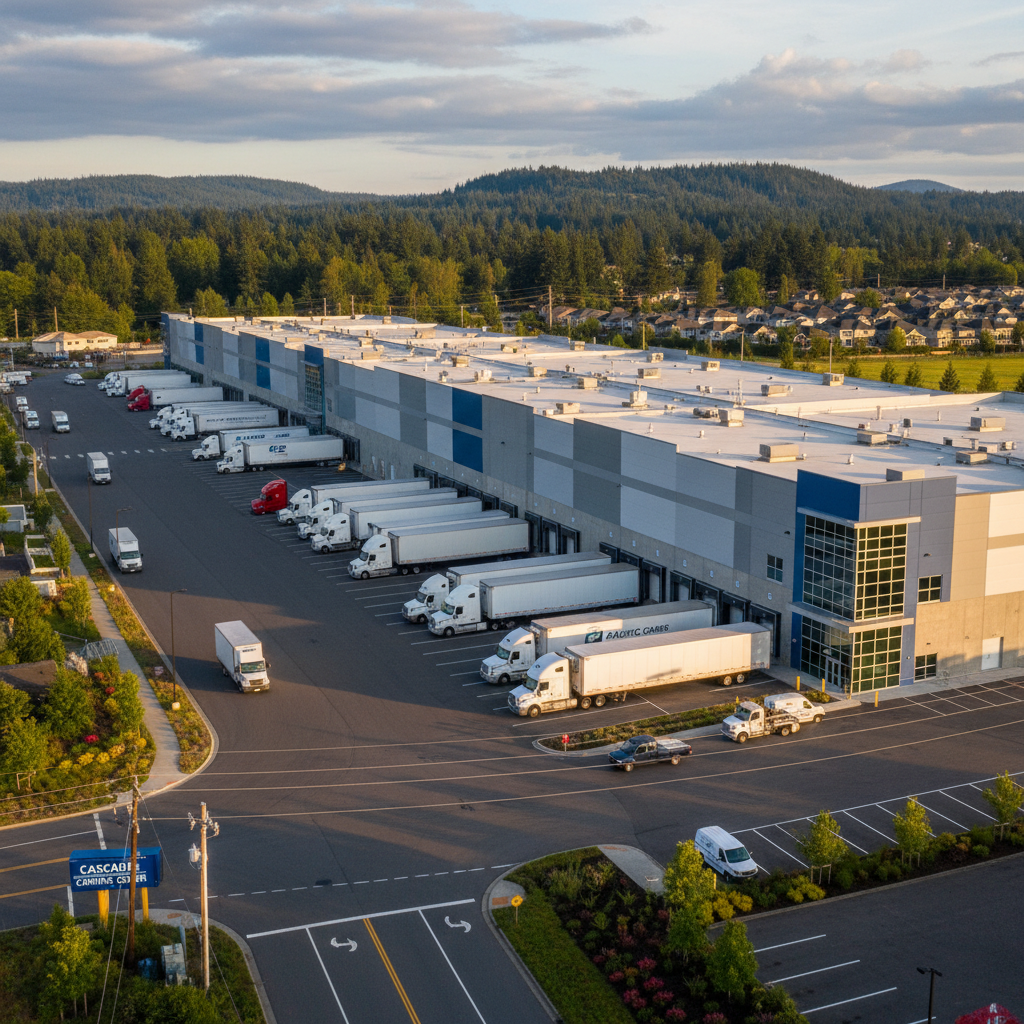
Washington’s industrial real estate remains one of the strongest-performing sectors in 2025, particularly around Kent Valley, Spokane, and Tacoma. While land and permitting constraints in the Puget Sound area persist, developers are expanding eastward, particularly near distribution corridors along I-90 and I-5.
Demand is being fueled by e-commerce logistics, aerospace manufacturing, cold storage, and green tech supply chains. Amazon, Boeing, and a growing cohort of EV-related firms continue to lease space aggressively, especially around Spokane and Moses Lake. According to Kidder Mathews, industrial vacancy rates in key markets are below 5%, with rents up 6–8% year-over-year.
The Port of Seattle and Port of Tacoma’s combined Northwest Seaport Alliance is investing heavily in infrastructure upgrades, further enhancing the region’s status as a Pacific trade gateway. That’s attracting long-term investment in surrounding industrial parks.
2. Office Sector Faces Prolonged Rebalancing, Especially in Seattle
Washington’s office market, particularly in downtown Seattle and Bellevue, continues to experience elevated vacancy in 2025. The hybrid work model remains entrenched among the state’s largest employers—Amazon, Microsoft, and T-Mobile among them—reducing overall office space demand even as selective leasing picks up in Class A buildings.
Seattle’s office vacancy rate has climbed to 22.1%, while subleasing continues to flood the market. Some legacy office buildings are being repositioned for life sciences or residential use, especially near South Lake Union. Others remain in limbo as landlords evaluate conversion costs amid high financing rates and new energy code compliance hurdles.
Suburban office parks in Redmond and Kirkland are faring better, aided by proximity to corporate campuses and strong transportation links. But statewide, leasing timelines have stretched, and investors are prioritizing flexible, amenity-rich buildings that can adapt to future tenant needs.
3. Life Sciences Emerges as a High-Growth Niche
One of the most promising commercial real estate sectors in Washington is life sciences. Fueled by continued funding for biotech and pharmaceutical startups, Seattle, Bothell, and Everett are becoming hubs for lab and research space development.
According to CBRE’s 2025 Life Sciences Outlook, Seattle ranks in the top 10 U.S. cities for life sciences growth, with over 2 million square feet of lab space in the pipeline. Companies specializing in gene therapy, diagnostics, and medical devices are expanding rapidly, often locating near the University of Washington, Fred Hutchinson Cancer Center, and Allen Institute.
Developers are converting outdated office space into wet labs, although such retrofits come with high costs and regulatory hurdles. Nevertheless, capital continues flowing into the sector, viewing it as a stable, future-proof CRE niche in Washington.
4. Multifamily Investment Spreads East of the Cascades
Multifamily development remains robust in Washington, especially outside King County. As housing affordability worsens in Seattle, development is accelerating in Spokane, Tri-Cities, and parts of Snohomish and Pierce counties.
In 2025, average rents in Seattle are up just 1.8% year-over-year due to increased supply and tenant protections, while cities like Pasco and Richland have seen rent growth of 5–7%. Build-to-rent (BTR) and workforce housing developments are gaining traction as developers target middle-income tenants priced out of homeownership.
New zoning allowances under the state’s 2023 housing reform laws have made it easier to build higher-density projects near transit corridors, particularly in suburbs like Lynnwood and Federal Way. These legislative tailwinds are reshaping where capital is flowing across Washington.
5. Retail Adapts with Mixed-Use and Localized Focus
Washington’s retail real estate sector is uneven in 2025. Malls and big-box formats are still struggling, with several national retailers downsizing or exiting underperforming locations. Yet retail that serves local communities—particularly grocery-anchored centers and experiential storefronts—is performing well.
Mixed-use districts in Bellevue, Issaquah, and Vancouver have attracted renewed investor interest, thanks to integrated residential, retail, and entertainment offerings. Developers are increasingly blending retail into multifamily projects to activate ground-floor spaces and improve project economics.
Cannabis retail remains a stable subsector in Washington’s CRE landscape, with strong tax revenue and high tenant demand in both urban and rural locations. Meanwhile, sustainable and local-first retail concepts are helping to fill spaces left by national chains.
6. Environmental, Insurance, and Seismic Risks Reshape Planning
Sustainability and resiliency are front and center in 2025. From stricter energy codes to increased seismic retrofitting mandates, Washington developers face new environmental compliance costs. Green building certifications like LEED and WELL are increasingly expected—particularly for institutional capital partners.
Insurance premiums have also risen, particularly in wildfire-prone areas in Central and Eastern Washington. Developers are responding by limiting exposure to high-risk zones and investing in fire-resistant construction and defensible space designs.
Seattle and other cities along the Cascadia Subduction Zone are re-evaluating building standards in light of seismic risk. That’s leading to more demand for new construction over retrofits, especially in the healthcare and education sectors.
7. Capital Markets Tight But Gradually Improving
While transaction volume across Washington State is still below pre-pandemic levels, there are signs of cautious optimism. Interest rate stabilization and falling inflation have helped restore some lender confidence in early 2025, particularly for stabilized multifamily and industrial assets.
Cap rates have expanded 75–125 basis points since 2022, creating price discovery challenges—but also opportunities for well-capitalized buyers. Value-add investors are increasingly targeting markets like Bellingham, Spokane, and Wenatchee, where competition is lower and fundamentals are improving.
Public-private partnerships, tax increment financing, and federal Opportunity Zone incentives remain key tools for large-scale development, especially in underserved urban and rural areas.
Washington State CRE Outlook: A Pivot to Resilient, Regionally Focused Growth
Washington’s 2025 commercial real estate recovery is marked by strategic recalibration. While legacy urban office towers struggle, other sectors—industrial, life sciences, multifamily, and logistics—are expanding across both sides of the Cascades.
Key trends to watch include:
- Inland migration of capital to Spokane, Tri-Cities, and Yakima
- Accelerated life sciences development in Seattle and Snohomish County
- Strong demand for suburban and affordable housing
- Adaptive reuse of office and retail in high-density corridors
- Climate-conscious planning shaping new construction
In a state defined by both innovation and natural risk, Washington’s CRE future depends on building not just profitably—but sustainably, regionally, and with resilience at its core.