- calendar_today August 17, 2025
Former President Donald Trump made waves last week when he called wind turbines a “con job.” They drive whales “loco,” he said. Kill birds. Wreck people’s health. It was his latest in a series of inflammatory attacks on renewable energy, like last year’s claim that solar panels have an “insane epidemic of fire.”
At first glance, these outbursts sound like predictable diversions from the day’s topic at an ill-tempered press conference. But beneath the theatrics is a deeper pattern that Trump is tapping into. In the global history of renewable energy since the 1970s, conspiracy theories are as old as wind turbines themselves. Trump is not creating these anxieties—he is capitalizing on them.
Wind turbines are “windmills” in Trump’s rhetoric. The president’s references harken back to the moral panic about wind turbines that began 20 years ago—and to earlier controversies, which boiled down to the same fear. Critics claimed wind turbines caused diseases akin to the “epidemic of fire” that Trump recently alluded to in his anti-solar tirade. People worried that these structures could disrupt their way of life or that their telephones—another common 19th-century panic—would spread sexually transmitted diseases. The parallels between turbine angst and telephone terror, as historians and psychologists have noted, are a window into how deeper anxieties about progress and social change tend to manifest as fear of specific technologies. The anxieties about wind power sound extreme, but are relatively common.
New academic research has found that once these worldviews take root, they are extremely hard to change. Reality checks or scientific reassurance won’t move people who oppose clean energy on a deep, almost existential level. That is not only bad news for fact-checkers but also a big problem for governments, businesses, and other institutions scrambling to accelerate the energy transition.
The Bitter History of Wind Conspiracy Theories
Climate science has sounded the alarm about the risk of runaway carbon dioxide emissions since at least the 1950s. But the early campaigns for renewables made clear that technological change can also threaten other powerful interests. That was the implication of one early episode from The Simpsons when residents of Springfield are forced to buy nuclear power to avoid being blinded by the coal tycoon Mr. Burns’ tower that eclipses the sun.
The cartoon show was exaggerating real fears at the time that entrenched fossil fuel companies and utilities would fight to prevent renewable energy from scaling up. And that is exactly what history shows those fears were based on. In 2004, the then–prime minister of Australia, John Howard, enlisted a group of fossil fuel industry executives, scientists, and engineers to coordinate their response to growing demand for wind, solar, and other clean technologies. Calling themselves the Low Emissions Technology Advisory Group, they launched with a clear mission: to figure out how to slow the spread of renewables to protect the dominance of coal, oil, and gas.
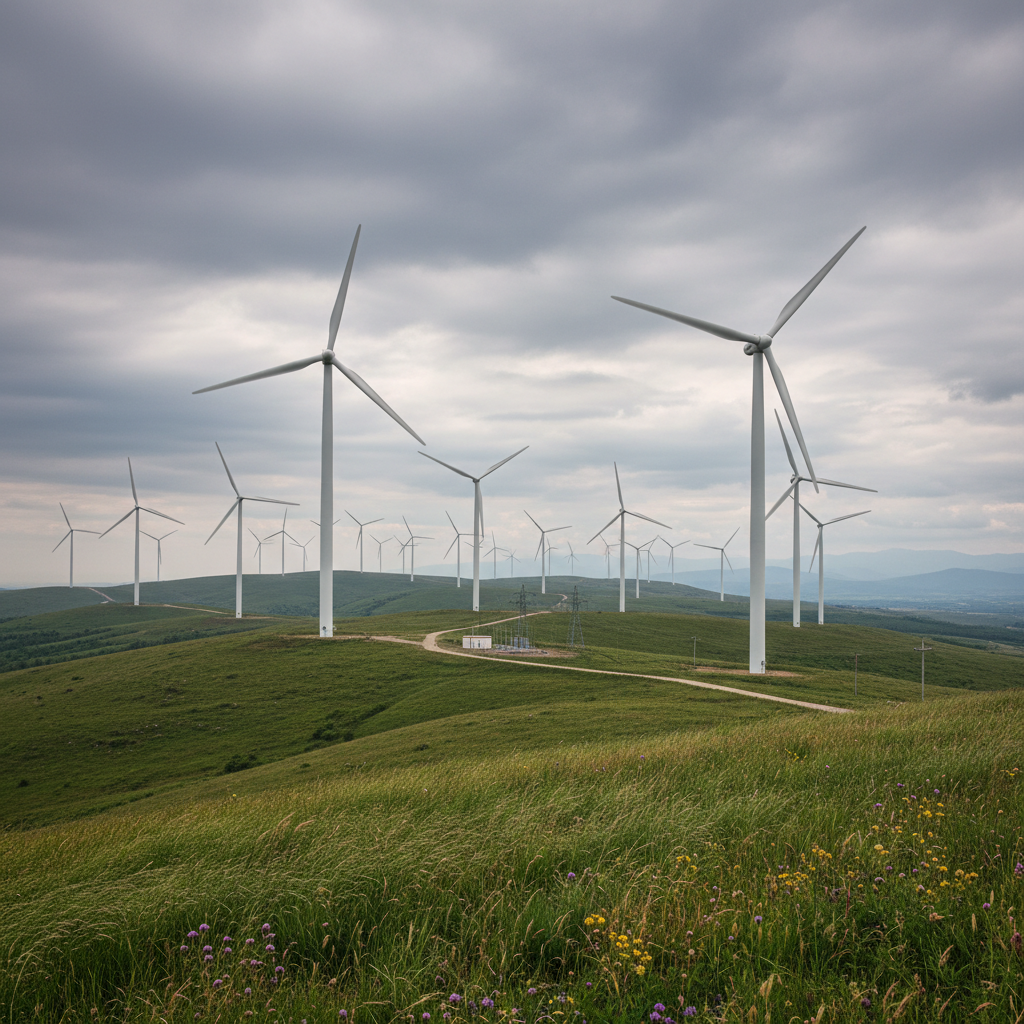
Wind farms, however, also faced barriers in public perception. Coal mines, oil fields, and nuclear power plants often remain far from public view. Wind turbines, on the other hand, are highly visible, frequently built on ridgelines or open plains in the middle of nowhere. That visibility has given conspiracy theories an easy target. Claims such as “wind turbine syndrome,” which has been called a “non-disease” by medical experts, have circulated for years in anti-wind books, films, websites, and chatrooms.
Academic studies have now confirmed what grassroots activists have long known: that attitudes toward wind turbines are less about demographics than about worldviews. In the first large-scale study of the issue, which looked at hundreds of respondents across Germany, a team led by political psychologist Kevin Winter found that “conspiracy thinking was one of the best predictors of attitudes towards onshore wind turbines.” Age, gender, education level, or political leaning mattered less than whether someone was inclined to believe in conspiracy theories. Similar results have emerged from more recent surveys of Americans, Britons, and Australians. The people who believe in conspiracy theories—whether about climate change, government control of society, or energy security—tend to view wind turbines as a danger.
It is extremely hard to fact-check people who hold these convictions. Laying out the facts that wind farms do not poison groundwater, do not cause mass blackouts, or make people ill has a negligible impact on beliefs. The opposition is less about misconceptions and more about worldviews. As Winter and his colleagues put it, the data suggest opposition to wind is “rooted in people’s worldviews.”
Wind farms are as much about symbolism as scale. For proponents, they are beacons of progress, technological innovation, and climate action. For opponents, they are symbols of government overreach, a loss of agency, or unwanted change.
Wind turbine attacks, then, are rarely about turbines themselves. Beneath the bluster, there is a broader cultural battle over the values, ideas, and identities being taken for granted in a post-carbon world.
At the center of that culture war is a reality about fossil fuels that most of us take for granted. Fuels derived from ancient sunlight powered an era of prosperity. The standard of living that people across the world enjoy today is built on carbon dioxide emissions. As a result, coming to terms with the externalities of those fuels is also a tacit admission that much of that prosperity came at a high environmental cost. For some people, the connection between wealth and pollution is so strong that acknowledging that history feels like a way of invalidating the past. Scholars have even coined a term for the refusal to look back on the negative consequences of past eras: “anti-reflexivity.” Trump’s rhetoric, often nostalgic for an earlier age of coal, oil, and gas, is quintessentially anti-reflexive.